Recovery & Wellness

Understanding Recovery

Recovery is not simply the absence of exercise or work.

The body continually adapts to physical and psychological demands. Recovery provides the conditions needed to restore capacity, manage fatigue and prepare for future activity.

Massage may form part of this process, but recovery depends on much more than a single treatment.

Wellness

Understanding the everyday factors that support physical function, recovery, resilience and long-term wellbeing.

Stress, Load & Recovery

Physical activity creates stress on the body. Appropriate stress can stimulate adaptation, while excessive demand without sufficient recovery may contribute to fatigue and reduced performance.

Sleep, nutrition, hydration, movement, rest and workload all influence recovery.

This means effective recovery is less about finding one perfect technique and more about creating an appropriate balance between load and restoration.

What You Need to Understand

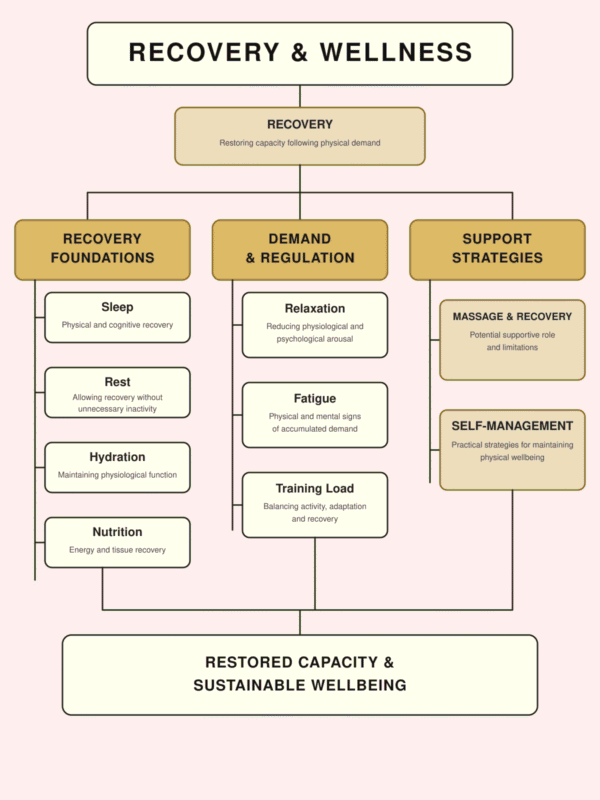
Recovery — how the body restores capacity following physical demand
Sleep — its relationship with physical and cognitive recovery
Rest — allowing recovery without unnecessary inactivity
Hydration — maintaining normal physiological function
Nutrition — supporting energy requirements and tissue recovery
Relaxation — reducing physiological and psychological arousal
Fatigue — recognising physical and mental signs of accumulated demand
Training Load — balancing activity, adaptation and recovery
Massage & Recovery — understanding its potential role and limitations
Self-Management — practical strategies for maintaining physical wellbeing


Build Your Understanding

Recovery is not one treatment, product or technique. It is a process.

Explore Recovery & Wellness

Explore the articles below to understand the factors that influence recovery and how they can be combined to support health, activity and performance.

Explore Recovery & Wellness →