
“My back hurts. Should I use heat or ice?”
A simple question.
And somehow it has produced decades of arguments involving frozen peas, hot-water bottles and very strong opinions. You may have heard: Ice for injuries. Heat for tight muscles. Or perhaps: Never use ice because inflammation is necessary for healing. So which one is correct? The answer is less dramatic:
Heat and cold can both be useful depending on the situation and what you’re trying to achieve. Neither one is a universal treatment.
Because heat and cold are generally best thought of as tools for managing symptoms. They don’t automatically fix the underlying cause of pain or injury.
Start With the Most Important Question
Before deciding between heat and cold, ask: What are we trying to change?
Pain?
Comfort?
Muscle soreness?
A feeling of stiffness?
Swelling?
The ability to move?
Knowing the goal makes the choice much easier.
Heat can feel relaxing and comfortable. People commonly use it for:
- muscle soreness or tension
- stiffness
- aching
- temporary pain relief
- making movement feel more comfortable
If your back feels stiff after sitting all day, a warm shower or heat pack may feel excellent. That doesn’t necessarily mean heat has “loosened” or permanently changed the muscle. It means your symptoms may feel different. And that can be useful.
You’ve probably heard: “Heat increases circulation, so it speeds up healing.” Heat can influence local circulation. But we need to be careful with the next step in that explanation. More blood flow does not automatically equal faster tissue healing.
Healing involves many biological processes and is influenced by the tissue involved, severity of injury, health, nutrition, activity, rehabilitation and time. So heat may help you feel more comfortable. It may make movement easier. But we shouldn’t promise that a heat pack will dramatically accelerate tissue repair.
Cold is commonly used to reduce pain and temporarily change sensation in an area. For some people, this can make an irritated or painful area more comfortable. Cold may also be useful in certain situations where swelling is present.
But again: Cold is a tool not a cure. The fact that something feels numb afterwards doesn’t mean the injury has been repaired. It means the sensation has changed.
This is where the conversation often becomes unnecessarily extreme. Inflammation is part of the body’s normal response to injury. That has led to claims that using ice is always harmful because it “blocks inflammation” and therefore prevents healing.
That’s too simplistic. At the other extreme, we shouldn’t assume every injury must immediately be iced because inflammation is something that needs to be completely stopped. The practical question is: Does cold help manage the symptoms in this situation, and is it being used appropriately?
We don’t need to declare war on inflammation. And we don’t need to declare war on ice.
*********
Don’t Use Temperature as a Diagnosis
There’s another trap here. Someone applies heat and feels better.
Therefore: “The muscle must have been tight.” Not necessarily. Someone applies ice and feels better.
Therefore: “There must have been inflammation.” Also not necessarily.
Response to heat or cold doesn’t automatically tell us what structure is causing the problem. Remember:
Symptom relief is information not a diagnosis.
There isn’t one answer for every musculoskeletal problem. Sometimes heat feels better. Sometimes cold feels better. Sometimes neither makes much difference. And sometimes you don’t need either.
For uncomplicated aches and soreness, personal response can help guide the choice. If gentle heat makes movement more comfortable, that may be useful. If cold provides temporary pain relief after an aggravating activity, that may also be useful.
The better option is often the one that safely helps you manage the symptom you’re actually trying to change.
Heat should feel comfortably warm. Not: “How hot can I tolerate before this becomes a medical experiment?”
Avoid temperatures capable of burning the skin. Use a protective layer when appropriate rather than placing a very hot source directly against the skin. Check the skin regularly. And don’t fall asleep with a heating device unless the product is specifically designed and instructed for that use.
Extra caution is important when someone has reduced sensation, impaired circulation or difficulty recognising temperature. If you can’t reliably feel how hot something is, you may not recognise that the skin is being injured.
The same principle applies to cold. More extreme isn’t automatically more therapeutic. Avoid placing very cold or frozen objects directly against bare skin for prolonged periods. Use an appropriate barrier.
Check the skin. And pay attention to how the area responds. Cold exposure should not become a competition to see who can tolerate numbness the longest.
People with certain circulation problems, cold sensitivity or reduced sensation may need to avoid cold therapy or seek individual healthcare advice.
This is a recurring theme throughout treatment and recovery. More pressure isn’t automatically better massage. More flexibility isn’t automatically better mobility.
More exercise isn’t automatically better recovery. And:
More heat or more cold isn’t automatically better treatment.
If moderate exposure provides the comfort you’re looking for, making it hotter, colder or dramatically longer doesn’t necessarily improve the outcome. It may simply increase risk.
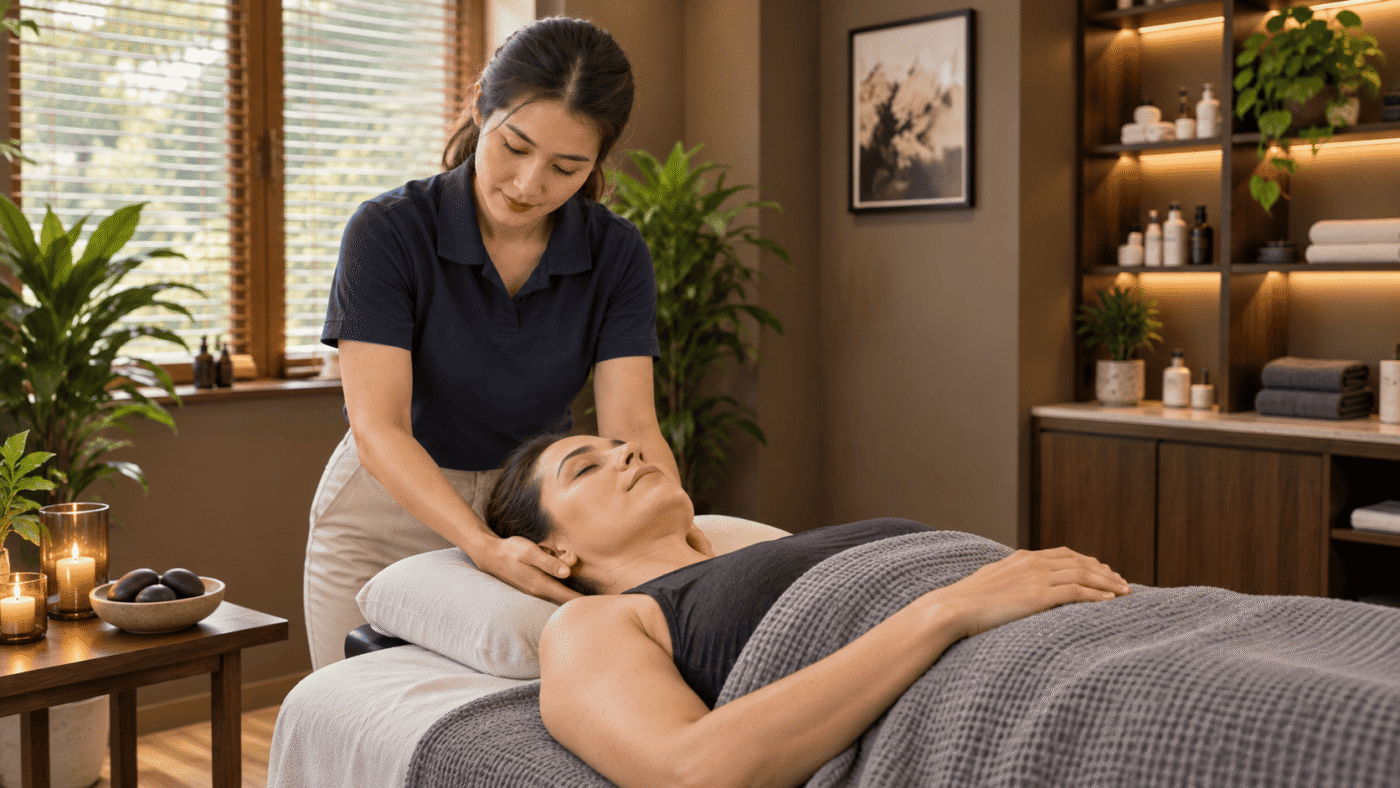
Some people enjoy warmth after massage because it feels relaxing. Others may prefer nothing at all. There isn’t a universal requirement to apply heat or ice after massage.
The decision should depend on the individual, the treatment performed and how the person responds. If you’ve just had treatment and feel comfortable: You don’t need to create an elaborate recovery protocol simply because you think you should.
Sometimes the correct post-treatment equipment is…nothing.
Use the Tool Then Reassess
Identify the symptom → Choose the tool → Observe the response → Reassess
And like every tool we’ve discussed throughout OLO, their value depends on why you’re using them, whether they’re appropriate and what happens afterwards.
And sometimes the symptoms need further assessment rather than another trip to the freezer. Use temperature for a reason not because it’s a ritual.
Your Body Talks. Learn to Listen.
And if your frozen peas have spent more time treating your knee than appearing at dinner…perhaps they deserve their own Medicare number.
Ask it. Even if you think it’s a ridiculous question.
Someone else has probably wondered exactly the same thing.
