
Your Body Talks. Are You Listening?
What I’ve Learned From the Treatment Room
After working with people who come in with pain, stiffness, weakness, numbness, old injuries and sometimes symptoms they cannot even explain, I have learned one thing:
The body rarely stays completely silent.
Sometimes it speaks through pain. Sometimes through stiffness. Sometimes through weakness, fatigue, numbness or a movement that simply does not feel the way it used to. The difficult part is not always making the feeling disappear.
The difficult part is understanding what the body is trying to tell us and knowing what to do next. This is what I wish more clients understood before they walk into a treatment room.
Tell Me More, Not Less
When you complete your health history or treatment form, it can be tempting to write only: “My shoulder hurts.” But the more relevant and accurate information you give me, the clearer the picture becomes.
A previous injury may matter. Medication may matter. An operation from several years ago may matter. The fact that the pain wakes you at night may matter. Numbness, weakness, dizziness or a recent change in your health may completely change how I approach the session.
Sometimes something that seems unimportant to you becomes the clue that makes me stop and think: “Maybe massage is not what this person needs today.” So please do not think of the form as paperwork before treatment. The treatment begins before the massage starts. It begins with the story you tell me.
More Treatment Does Not Always Mean Better Treatment
Another thing I have learned is that coming for treatment frequently does not automatically mean you are taking better care of yourself. You can receive massage every week and still make very little progress. If we are doing the same treatment again and again, while the same problem keeps returning, eventually we need to ask:
Why are we still doing the same thing?
Does your neck actually move better?
Can you walk further?
Are you sleeping better?
Can you lift something that you could not lift before?
Or do you simply feel good for two days before everything returns?
There is an important difference. Massage may provide relief. However, relief and recovery are not always the same thing.
That is why I believe your condition should be reassessed from time to time, rather than assuming that another appointment automatically means another step forward.
Frequency is not progress. Progress needs reassessment.
Tell Me What Happens After the Treatment
Your session does not really end when you walk out of the room. What happens afterward gives me valuable information. If you move better, I want to know. If the pain changes, I want to know. And especially, if your symptoms become significantly worse or something new appears, please tell me.
Sometimes the correct response is to modify the next treatment. Sometimes it is to stop treating the area. And sometimes the most responsible thing I can do is recommend that you see a GP, physiotherapist or another appropriate healthcare professional.
When necessary, I can also provide a written treatment summary describing what you reported, what was observed and why further assessment may be appropriate. That is not a failure of massage. Quite the opposite.
Sometimes good treatment means continuing. Sometimes good treatment means knowing when to stop and look for another answer.
Massage Is Maintenance Not an Engine Repair
I often think about the body in the same way I think about maintaining a car.
A car needs regular care.
You check it.
You service it.
You change the oil.
You notice when something starts sounding or feeling different. But if the engine develops a serious fault, changing the oil again is not going to repair the engine. You need to find out what has actually gone wrong.
Massage can be similar. It may help with comfort, muscle tension, movement and some types of pain. However, the evidence for massage varies considerably between conditions, and benefits are often short-term rather than a cure for the underlying problem.
Massage therapists also do not diagnose every medical condition. That boundary matters. Massage can support the body. It cannot repair everything that goes wrong inside it. And I would rather tell you that than keep treating something that needs a different kind of care.
Pain Is an Alarm But an Alarm Is Not a Diagnosis
Pain gets our attention. That is part of its job. When something hurts, most people understandably want the pain to disappear as quickly as possible. Sometimes they rest. Sometimes they take pain relief. Sometimes they ignore it and hope it disappears.
Pain medication can be useful, and I do not think people should be frightened of using appropriate medication simply because they are in pain. However, there is an important distinction: Feeling less pain does not necessarily explain why the pain started.
Pain is complicated. It is influenced by biological, psychological and social factors, and the amount of pain someone experiences does not always correspond directly with the amount of tissue damage. So I would rather you become curious.
When does it hurt?
What makes it worse?
What makes it better?
Is it becoming more frequent?
Is your strength changing?
Can you still perform the activities you normally do?
A painkiller may help control the alarm. Sometimes that is exactly what you need. But understanding why the alarm keeps returning is a different question.
Not Every Click, Crack or Grind Means Something Is Wearing Away
People often tell me:
“My knee makes a grinding sound.”
“My shoulder clicks.”
“My ankle cracks every time I move it.”
And then: “But it doesn’t hurt, so I suppose everything is fine.”
This is an area where we need some balance. Joints contain synovial fluid, and movement can produce sounds for several reasons, including changes in pressure within the joint or tendons and ligaments moving across nearby structures. Noisy joints without pain are extremely common and, by themselves, usually do not mean the joint is being damaged.
So I do not want you to become frightened every time your body clicks. At the same time, I do want you to notice when the pattern changes. If a new sound comes with pain, swelling, locking, instability or loss of function, that tells us more than sound alone. That is the way I think we should listen to the body: Don’t panic at every noise. But don’t ignore a changing pattern.
Massage Is More Than “Moving Fluid” And Less Magical Than People Sometimes Claim
You may have heard massage described as “increasing circulation,” “flushing toxins,” “moving fluid” or “releasing everything that is stuck.” The human body is much more complicated than that. Massage certainly interacts with skin, muscles and other soft tissues, and touch may influence comfort, relaxation, movement and the experience of pain.
But there is no single mechanism that explains every effect of massage, and even researchers still do not fully understand all of the mechanisms involved. So I do not want to sell you a magical explanation. I prefer a simpler one. Your body is already constantly working to regulate, adapt and repair itself.
Massage is one input into that system.
Sometimes it is useful.
Sometimes exercise matters more.
Sometimes recovery matters more.
Sometimes medical treatment matters more.
And sometimes what the body needs most is time.
Harder Does Not Mean Better
One request I hear often is: “Go hard. I can take it.” Some people believe that if massage hurts more, it must be doing more. I do not agree.
The right amount of pressure depends on the person, the tissue, the condition and what we are actually trying to achieve. A strong massage can feel good to someone who tolerates it well.
For somebody else, the same pressure may simply leave them sore and guarded. Serious complications from massage are uncommon, but adverse events have been reported particularly with vigorous techniques or people who are more vulnerable to injury.
So my goal is not to prove how strong my hands are. My goal is to find an input your body responds to appropriately. And this is why reassessment matters.
Did movement improve?
Did pain reduce?
Did you feel worse afterward?
Did the benefit last?
The right pressure is not the strongest pressure you can tolerate. It is the pressure appropriate for the person and the purpose.
Your Body Is Connected But Not in the Simple Way We Sometimes Imagine
The body is divided into different muscles, joints, nerves and regions because that makes anatomy easier to describe. But when you actually move, those parts do not work in isolation. Your hand affects what happens further up the arm. Your hip influences how you walk. Your neck, jaw, shoulders and upper back may all contribute to how a movement feels.
That is why someone may come in saying: “My head hurts. Why are you looking at my neck?” Or: “My shoulder hurts. Why are you checking my arm?” The painful area matters.
However, it may not tell the whole story. At the same time, we need to be careful not to create another myth. If your headache happens to disappear after your feet are massaged, that does not prove that the feet caused the headache. Sometimes symptoms change for reasons we cannot identify from one treatment session.
A massage therapist should not invent a diagnosis simply because a technique appeared to work. Instead, I look for patterns.
What reproduces the problem?
What changes it?
What stays the same?
What happens after treatment?
And does that pattern remain consistent over time?
The body is connected. But connection does not mean everything causes everything else. That distinction is important.
I Don’t Want You to Depend on Treatment
This may sound strange coming from someone whose job is to provide treatment. But I do not think the goal should be to make you believe you need massage forever. If massage helps you feel better and you enjoy having it as part of looking after yourself, that is completely reasonable. But I would rather you understand your own body well enough to recognise:
when something simply needs time,
when you may need to move more,
when you need to reduce a particular load,
when treatment may help,
and when something should be investigated by another healthcare professional.
For me, that is much more valuable than convincing you to book another appointment simply because the calendar says it is time. My job is not to make you dependent on treatment. My job is to help you understand when treatment may help and when it is time to look for a different answer.
Your Body Talks. Learn to Listen.
Your body rarely changes without leaving clues.
Sometimes it is pain.
Sometimes stiffness.
Sometimes weakness.
Sometimes fatigue.
Sometimes numbness.
And sometimes it is simply something that no longer feels the way it used to.
You do not need to become frightened by every sensation. You do not need to analyse every click. And you certainly do not need to assume that every painful muscle is damaged.
Just pay attention.
Notice patterns.
Keep track when something keeps returning. Ask questions.
Reassess.
And when something does not make sense, find someone qualified to investigate it with you.
Because looking after your body is not about chasing every symptom. It is about understanding enough to know when to act, when to adapt and when to ask for help. Your body has been talking to you your entire life.
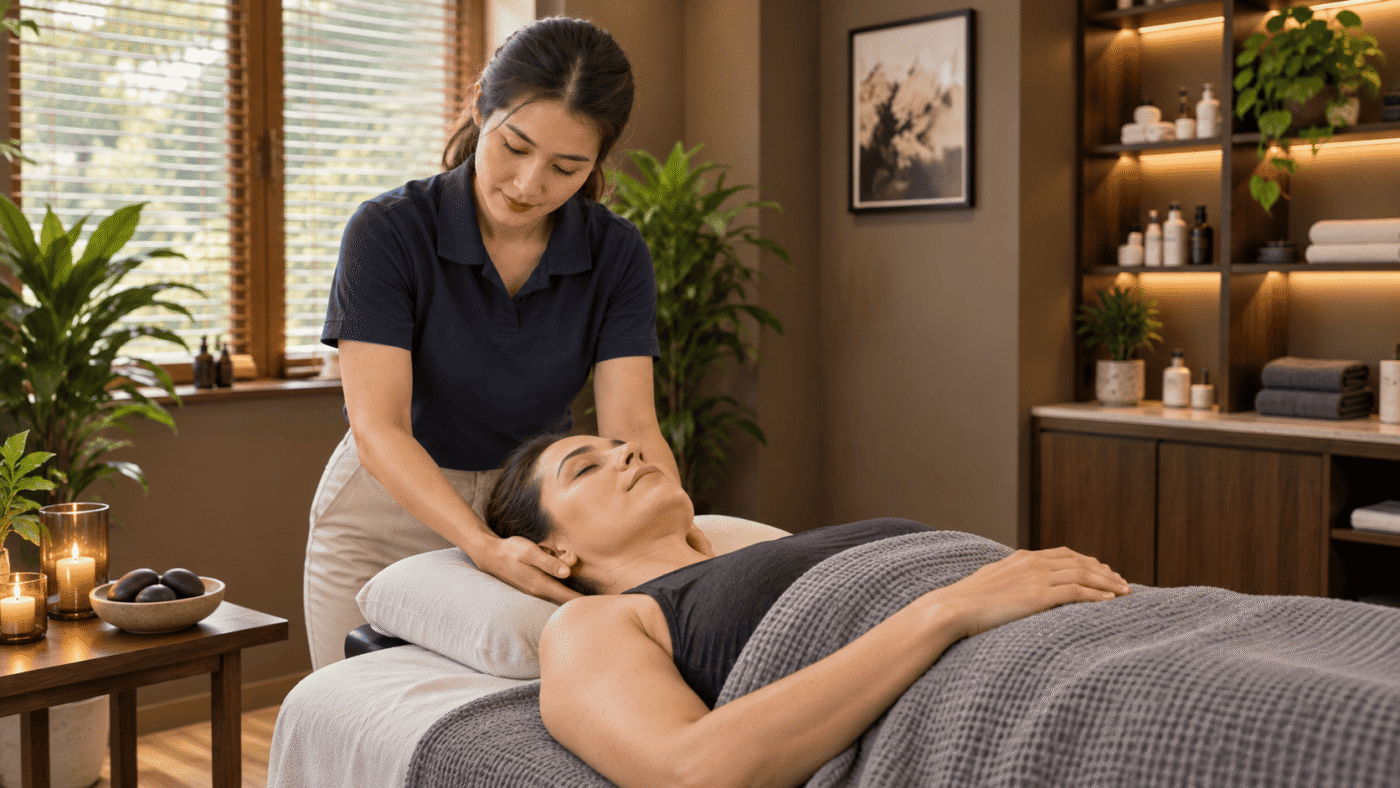
Ask it. Even if you think it’s a ridiculous question.
Someone else has probably wondered exactly the same thing.
