
“What should I do now?”
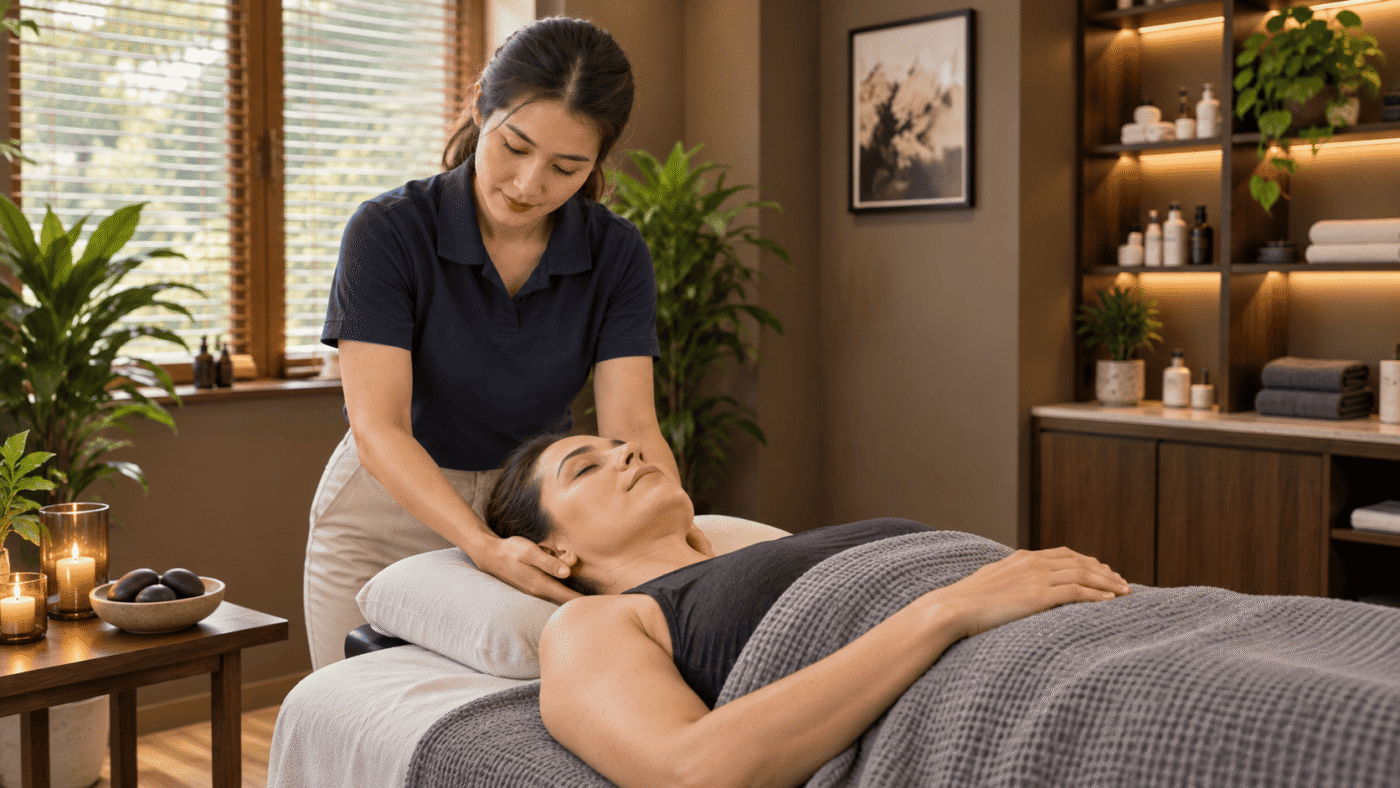
Your massage is finished.
You sit up. Your body feels different.
Maybe looser.
Maybe lighter.
Maybe a little tender.
Pay attention to how your body responds.
Drink three litres of water?
Stretch everything?
Take a hot bath?
Avoid exercise?
Lie perfectly still for the rest of the day?
Fortunately, post-massage care usually doesn’t need to be that complicated.
First: Give Yourself a Moment
After lying on a treatment table for a while, don’t feel you need to jump up immediately.
Sit up gradually.
Move around.
Notice how you feel.
If you feel light-headed, take your time before standing or walking away. Then notice the reason you came for treatment in the first place.
How does that movement feel now?
Has the pain changed?
Does your neck turn more comfortably?
Does your shoulder move differently?
Can you bend, walk or squat more easily?
This is where post-treatment recovery begins: Observe the response.
Yes, you can drink water after massage. But you don’t need to force yourself to drink enormous amounts because someone told you massage “released toxins.” Massage doesn’t require a detox protocol.
Your body already has systems responsible for managing metabolic waste and fluid balance. Maintain sensible hydration according to your normal needs, activity, environment and health. If you’re thirsty: Drink.
If you’ve exercised heavily or been sweating: Your fluid needs may be greater. If you’re not thirsty: You don’t need to panic because you haven’t immediately finished a litre of water. Hydrate because your body needs water not because massage needs detoxification.
Not automatically. Some people enjoy gentle stretching after treatment. That’s fine. But massage doesn’t create a universal requirement to stretch. If stretching is part of a specific plan and you know what movement you’re trying to improve, it may be useful.
But remember: Feeling tight doesn’t automatically mean a muscle needs stretching. And more flexibility isn’t automatically better. Instead of stretching everything that was treated, ask: “What movement am I trying to improve?”
Stretch with a purpose. Not because it’s part of the post-massage ceremony.
This depends on the treatment and what you’re planning to do. Normal daily movement may be completely appropriate for many people. A gentle walk or comfortable movement may also feel good. But after a more involved treatment, immediately testing yourself with your hardest workout may not always be the most useful experiment.
Consider:
- how intensive the treatment was
- why you received treatment
- how you feel afterwards
- your normal training level
- what activity you’re planning
- whether symptoms have changed
Sometimes normal activity is fine. Sometimes modifying intensity or workload makes more sense. And sometimes rest is appropriate.
Remember: Recovery can be a dial, not a switch. You don’t always have to choose between a hard workout and doing absolutely nothing.
Some temporary tenderness or soreness can occur after massage, particularly after more focused treatment. But soreness isn’t the objective. More soreness does not mean better treatment.
You don’t need to feel like you’ve been hit by a truck to prove that something therapeutic happened. If you do feel mildly sore, observe how it changes.
Does it gradually settle?
Can you move normally?
How do you feel later that day?
What about the next day?
This information can help guide future treatment. Significant, unusual, persistent or worsening symptoms deserve more attention rather than simply being labelled: “Normal after massage.”
You don’t automatically need either. If gentle warmth feels comfortable, you may choose to use heat. If cold provides useful temporary symptom relief in an appropriate situation, that may also be reasonable. But neither is a compulsory post-massage treatment.
Heat doesn’t automatically accelerate healing. Cold doesn’t automatically “remove inflammation.” Use them for a reason. Ask: What symptom am I trying to change? Then observe whether the strategy actually helps.
*********
Move But You Don’t Need a Mobility Marathon
After treatment, movement can give you useful information. If your shoulder was difficult to raise before treatment, try that movement again. If turning your neck was uncomfortable, notice whether it has changed. If bending or walking was the problem, reassess it.
You don’t need to perform 17 corrective exercises immediately. A few meaningful movements may tell you much more.
Remember: Measure what matters to your life. Not:“How flexible am I now?” But: “Can I do the thing I was struggling to do?”
Your recovery doesn’t finish when you leave the clinic. Sleep forms part of the larger recovery picture. If your body has been dealing with demanding work, training, pain or stress, recovery opportunities matter.
That doesn’t mean one bad night’s sleep will destroy the benefits of your massage. It simply means massage is one part of recovery.
Sleep. Movement. Nutrition. Hydration. Workload. Stress. Time.
They all contribute to the environment in which your body responds. No massage technique replaces them.
One of the most useful things you can do after treatment is simply observe. Not obsessively. You don’t need to analyse your shoulder every seven minutes. But notice the pattern.
What improved?
What didn’t?
How long did the change last?
What happens when you return to work?
What happens during exercise?
Does the original painful movement feel different?
Are you sleeping differently?
Are normal activities easier?
This information can be extremely useful at your next appointment. Because: Immediate improvement is useful information — but it isn’t the whole story.
After treatment, symptoms may change over time. Some improvements may remain. Some may gradually reduce. Some symptoms may fluctuate.
That doesn’t automatically mean you need another massage immediately. Depending on the situation, allowing time to observe the body’s response can be useful.
At OLO, there may be cases where we deliberately leave a longer interval — sometimes around two weeks before reassessing.
That doesn’t mean everyone needs two weeks to recover. And it doesn’t mean soreness should last for two weeks. The interval can simply give us time to observe:
What settled?
What improved?
What returned?
What still limits function?
Then the next treatment decision has more information behind it.
This is important. Good treatment shouldn’t create the belief that your body can only function if someone massages it every week. Massage may help. But ideally, treatment also helps you understand what your body needs between appointments.
Maybe that means movement. Strength. Better workload management.
Sleep.
Recovery.
Rehabilitation.
Or simply confidence to return to normal activity.
The goal isn’t:
Massage → Feel better → Wait until bad again → Massage → Repeat forever
A more useful process is:
Assess → Treat → Reassess → Observe → Adapt
Treatment should have direction.
If you’re uncertain about your response to treatment, ask. Especially if symptoms are significantly different from what you expected. A useful therapist should want to know how you responded.
That information helps guide the next decision. You don’t need to wait until your next appointment and announce: “Something weird happened three days after the massage, but I thought I’d just see what happened.”
Tell us. Clinical reasoning doesn’t stop when you walk out of the treatment room.
Most ordinary post-massage experiences don’t require medical attention. But don’t automatically assume every new symptom after treatment is simply part of “recovery.”
Seek appropriate medical assessment for concerning symptoms such as severe or rapidly worsening pain, substantial or progressive weakness, significant numbness or neurological changes, difficulty breathing, significant unexplained swelling, or other severe or unusual symptoms.
If something feels seriously wrong, don’t wait for your next massage appointment to investigate it. Knowing when massage isn’t the answer is part of good treatment.
For most people, the answer is refreshingly simple.
Drink normally.
Eat normally.
Move appropriately.
Rest when needed.
Sleep.
Follow any specific advice relevant to your treatment.
Observe how your body responds.
You don’t need to detox. You don’t need to force yourself to stretch. You don’t need to stay completely still. You don’t need to prove the treatment worked by being sore. And you don’t need an expensive recovery ritual waiting at home.
Your body has already started doing the important work. Give it an appropriate environment. Then listen to what happens next.
Treat → Recover → Observe → Reassess → Decide
Because what happens after treatment can sometimes tell us as much as what happened on the treatment table.
Your Body Talks. Learn to Listen.
And if someone tells you that after your massage you must drink exactly 2.7 litres of water, avoid showering, stretch every muscle and lie facing north for six hours…you are allowed to ask: “How do we know?”
Ask it. Even if you think it’s a ridiculous question.
Someone else has probably wondered exactly the same thing.
