
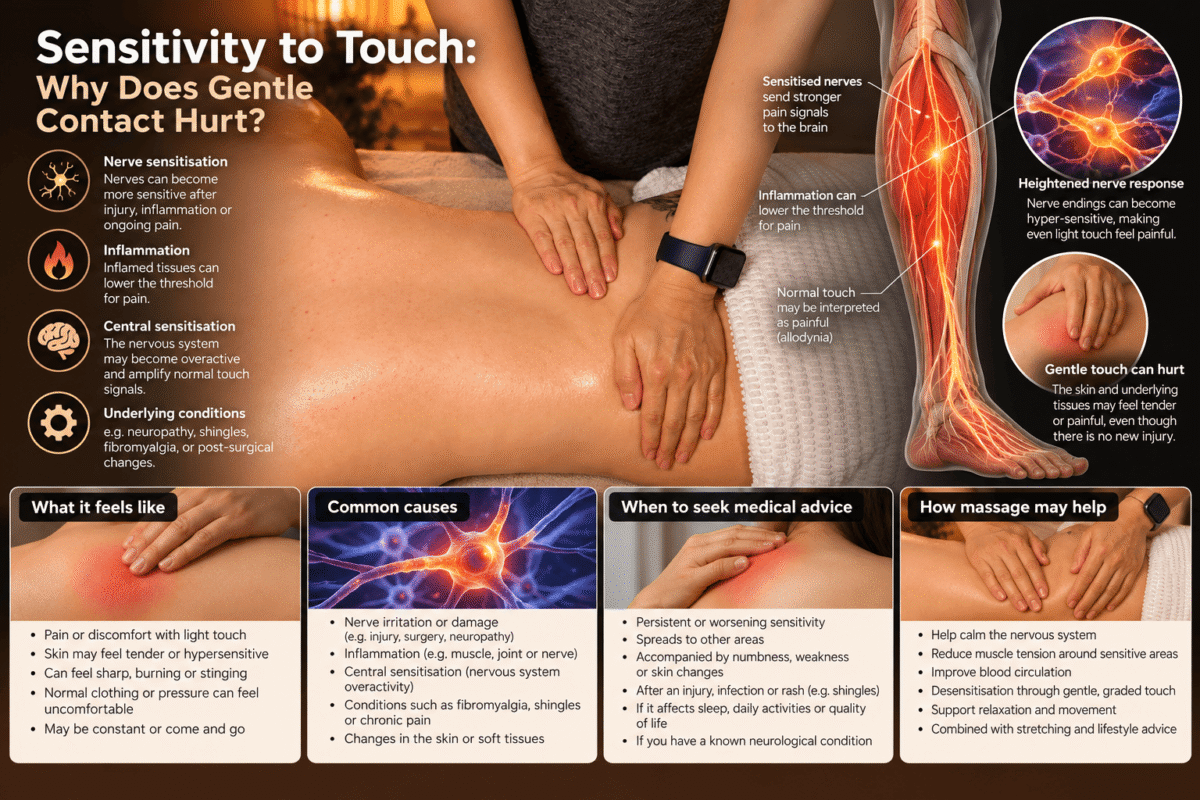
Sensitivity to Touch
Why Does Gentle Contact Hurt?
When light contact feels painful, asking someone to “work deeper” on the area makes little sense. The first task is to understand what kind of touch causes pain, when the sensitivity began and whether anything else has changed.
“Even my shirt brushing against it hurts.”
Sensitivity is a broad description. It may involve skin, an injury or the way the nervous system responds to touch. It is real even when there is no visible mark.
What does sensitivity feel like?
One person may feel discomfort only with firm pressure. Another may find that clothing, a bedsheet or a gentle hand feels painful. Heat or cold might also feel unusually intense.
Clinicians use allodynia to describe pain from a stimulus that would not normally hurt, such as light touch. Hyperalgesia means an unusually strong pain response to something that is normally painful. These terms describe a response; they do not identify its cause by themselves.
When you describe sensitivity, try to explain:
- What triggers it: light touch, pressure, movement, heat or cold?
- Is there a rash, swelling, bruising or change in skin colour?
- Is it confined to one area or spreading?
- Did it begin after an injury, illness or treatment?
- Do you also have burning, tingling, numbness or weakness?
What may cause sensitivity?
An irritated or injured area can become tender. Sensitivity can also occur with conditions involving the nervous system. For example, shingles may begin with a patch of sensitive skin and burning or tingling before a rash appears. Some people with complex regional pain syndrome experience severe pain from slight touch or temperature changes, often with other changes in the affected area. These examples show why “sensitive” is not a diagnosis.
The pattern is especially important. A tender spot after a known minor bump calls for different questions from a new, painful skin patch followed by blisters or a limb that becomes increasingly painful, swollen and difficult to use.
When should you seek medical care?
Arrange a medical assessment if sensitivity is new and unexplained, worsening, spreading or interfering with ordinary touch and daily activities. Seek prompt advice if a painful sensitive patch develops a blistering rash, or if sensitivity follows an injury and comes with marked swelling, colour or temperature changes.
What are the treatment options?
Treatment depends on the cause. A clinician may examine the skin, ask about the onset and triggers, and assess movement and sensation. The approach for a skin condition will differ from care for an injury or a nerve-related condition.
Meanwhile, it helps to stop repeatedly testing the painful spot. Pushing on it throughout the day may tell you that it still hurts, but it does not explain why. Record what brings on symptoms and whether the sensitive area is changing; that information is more useful at an assessment.
Can massage help sensitivity?
Massage should be adapted to the person’s tolerance, and direct work on a highly sensitive area may be inappropriate. Painful pressure is not necessary to “desensitise” an area, and a strong response should prompt the therapist to stop and reassess.
For some people with widespread pain and sensitivity, very gentle massage may be considered for comfort. Even then, the evidence for benefit is limited, and expert guidance recommends that massage should not cause pain.
Tell your therapist what kinds of contact are uncomfortable before treatment begins. You can agree to avoid the area, change the pressure or pause the session. If there is an unexplained rash, a significant change in the limb or rapidly worsening sensitivity, medical assessment may be the more useful next step.
From the therapist: “If light touch already hurts, more pressure is not the answer. Let’s work out what you can tolerate and whether this area needs medical assessment first.”
Your Body Talks. Learn to Listen.
Sensitivity to touch is meaningful information. Its trigger, location and accompanying symptoms should guide care not an assumption that the area needs a stronger massage.

Ask it. Even if you think it’s a ridiculous question.
Someone else has probably wondered exactly the same thing.
