The Nervous System
Why Can You Feel Pain When Nothing Looks Wrong?
It might be. But before treating the hand, we need to ask what strange means. Is it numb, tingling, burning or weak? Did the feeling begin in the hand, or does it travel down the arm?
“My hand feels strange, but there’s no bruise. Is it a muscle problem?”
Your nervous system helps you sense, move and respond. That is why a problem involving nerves may change how an area feels or works without leaving an obvious mark on the skin. Understanding the pattern helps us choose the next step.
What does the nervous system do?
The nervous system includes the brain, spinal cord and nerves. The brain and spinal cord form the central nervous system. Nerves connecting them with the rest of the body form the peripheral nervous system. Together, they help you interpret sensation, control movement and regulate many everyday body functions.
Think of a simple task: you pick up a cup. Sensory information helps you feel its shape and temperature. Motor signals help your muscles grip and lift it. Your nervous system continually uses that information to adjust the movement.
That is also why sensation and strength should be considered together. A hand that feels numb raises one set of questions; a hand that is also dropping objects raises another.
How does this relate to pain?
Pain is an experience produced by the nervous system, but it is not a direct meter of tissue damage. An injured area can hurt, yet pain can also continue or change in ways that a simple examination of the tissue does not fully explain. The International Association for the Study of Pain distinguishes pain from nerve signalling associated with potentially harmful stimuli and stresses that a person’s report of pain should be respected.
This does not mean that unexplained pain is imagined. It means that to understand it, we need more than a picture of a muscle or a single tender spot.
The nervous system can also be involved in symptoms other than pain:
- Numbness: Reduced or absent feeling.
- Tingling: A pins-and-needles sensation.
- Burning or shooting pain: Possible descriptions of nerve-related symptoms, though the words alone do not establish a diagnosis.
- Weakness: Difficulty producing a movement or using a limb as you normally would.
What questions help make sense of the symptoms?
When someone tells me an arm or leg “doesn’t feel right,” I want to know:
- Where did the symptom start, and where does it go?
- Did it begin suddenly or gradually?
- Is there a change in feeling, movement or both?
- Does a position or activity bring it on?
- Is it improving, staying the same or spreading?
A clinician may use the answers alongside checks of sensation, strength, reflexes and movement. The goal is to decide whether the symptoms fit a local problem, a possible nerve issue or something needing further medical assessment. A massage therapist should work within their training and refer when the findings fall outside that scope.
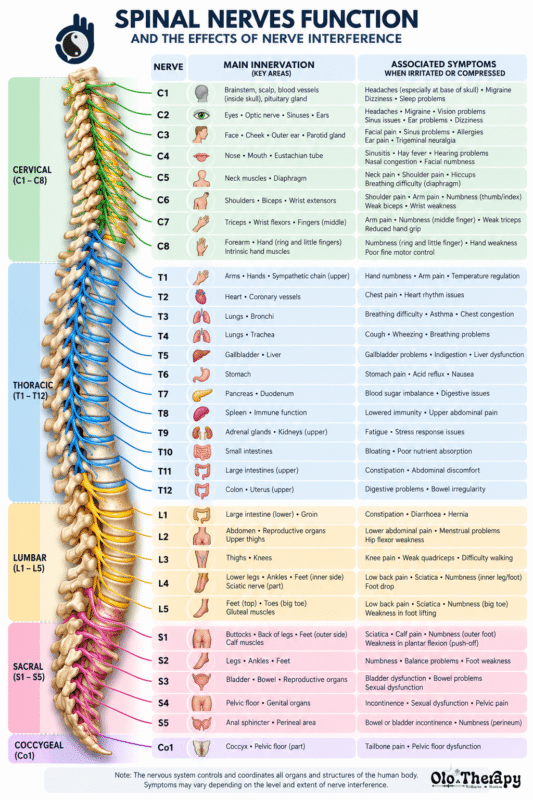
For a closer look at the pathways serving the face, arms and legs, read Spinal and Cranial Nerves: Where Is That Sensation Coming From?
What are the treatment options?
The cause determines the treatment. A temporary change in sensation after holding an awkward position differs from persistent numbness, progressive weakness or pain related to a diagnosed condition. Depending on the assessment, care may involve advice about activity, exercise or physiotherapy, medicines, or further medical investigation.
Keep track of a practical change: Can you grip normally? Are you tripping? Has the numb area grown? This information is more useful than repeatedly pressing on the painful spot to see whether it still hurts.
When should you seek urgent help?
Sudden facial drooping, difficulty speaking, or weakness or numbness on one side of the body can be signs of a stroke. Call emergency services immediately 000 in Australia. Seek urgent help even if the symptoms start to improve.
Arrange a medical assessment for numbness that persists, spreads or occurs with increasing weakness.
Can massage help?
Massage may help some people with associated muscle discomfort or provide short-term relief for certain pain conditions. It does not prove where a nerve problem begins, and it cannot be relied on to reverse nerve damage. Evidence for massage varies across conditions, with benefits often uncertain or short term.
Before treatment, tell your therapist about numbness, tingling or weakness. During treatment, report any technique that sends symptoms farther along an arm or leg or makes them stronger. The therapist can change the approach, stop or recommend further assessment.
Your Body Talks. Learn to Listen.
“I want to know what you can feel and what you can do not only where you hurt. Those clues help us decide whether massage belongs in your care plan.”
The key point: The nervous system connects sensation, movement and pain. Symptoms deserve to be understood as a pattern before anyone chooses a treatment.

Ask it. Even if you think it’s a ridiculous question.
Someone else has probably wondered exactly the same thing.
