Manual Workers
Example Case
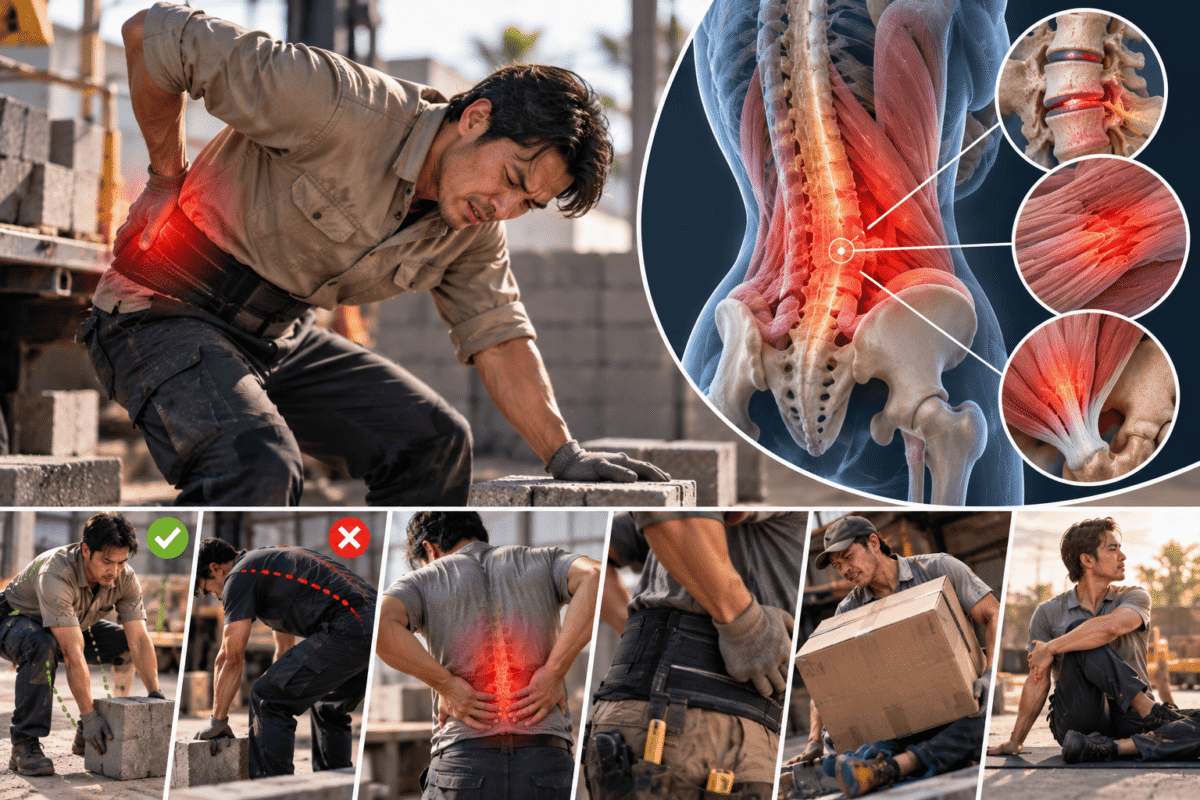
A 43-year-old warehouse worker visits the clinic with recurring lower-back discomfort. Initially, the pain appeared only after particularly busy days.
However, over the past month, it has gradually become more noticeable during normal working hours. There was no accident or sudden injury.
“I’ve been doing this job for almost 15 years. I lift heavy boxes, bend, twist and carry things every day. My back used to be fine, but lately it starts aching halfway through my shift. After resting over the weekend, I feel better. Then Monday comes, and the pain returns. Am I just getting old?”
Interestingly, the client recently started working longer shifts due to increased demand. So, is the problem really age or has something changed in the amount of work the body needs to handle? That is our first clue.
Subjective Symptoms
The client reports:
- Dull, aching pain across the lower back
- Stiffness after long working hours
- Discomfort during repeated bending and lifting
- Increased soreness toward the end of a shift
- Temporary relief during weekends
- No reported leg numbness or weakness
At first, the symptoms appear related to physical workload. However, lifting heavy objects is not necessarily harmful. The more important question is how the body responds to the frequency, intensity and duration of the work.
What It May Feel Like
Manual workers may experience:
- Lower-back or shoulder discomfort
- Muscle fatigue after repetitive tasks
- Stiffness following prolonged activity
- Pain during lifting, pushing or pulling
- Reduced movement confidence
- Aching that increases throughout the day
- Recurring soreness after demanding shifts
For some workers, symptoms settle with rest. Yet, when the same discomfort returns every working day, it may suggest that something about the workload or recovery needs attention.
Objective Findings
During assessment, the therapist may identify:
- Reduced or uncomfortable lumbar movement
- Tenderness around the lower-back muscles
- Pain during repeated bending or lifting
- Changes in movement with fatigue
- Reduced tolerance to sustained activity
- Relatively comfortable movement during lighter tasks
Further screening may also assess leg strength, sensation and reflexes when indicated. In this case, simple movements are relatively comfortable. However, discomfort increases during repeated loaded movements.
This provides another clue: the problem may be related to repeated physical demands rather than one particular movement.
*********
What Could It Be Related To?
Manual work places different demands on muscles, joints, tendons and other tissues. Lifting, carrying and repetitive movements are normal physical activities. Nevertheless, symptoms can develop when those demands become difficult to tolerate. Possible explanations include:
- Non-specific mechanical lower-back pain
- Temporary muscle or soft-tissue irritation
- Reduced tolerance to repetitive loading
- Fatigue associated with prolonged activity
- Previous injuries influencing current function
- Other spinal or neurological conditions requiring assessment
Importantly, pain does not automatically indicate spinal damage, a slipped disc or a serious injury. Therefore, assessment should consider both the symptoms and the overall working environment.
Several factors may influence the problem:
- Increased workload or longer shifts
- Repetitive lifting and carrying
- High or sudden physical force
- Prolonged or awkward working positions
- Limited recovery opportunities
- Inadequate equipment or workplace design
- Previous injuries and general fatigue
For example, lifting the same boxes may have been manageable for years. However, if the worker suddenly handles twice as many deliveries, the total physical demand changes considerably.
As a result, the issue may not be one incorrect lifting technique. Instead, it may involve the interaction between workload, physical capacity and recovery.
The assessment aims to determine:
- Which activities reproduce the symptoms
- Whether movement or loading tolerance is reduced
- How symptoms change throughout the working day
- Whether neurological symptoms or red flags are present
- Which workplace demands could be modified
- How the client can safely maintain or restore normal function
The therapist also wants to understand what has recently changed.
More deliveries?
Longer shifts?
Different equipment?
Fewer breaks?
Sometimes, the most important finding is not in the painful muscle but in the worker’s daily routine.
If no concerning condition is identified, management may include:
- Temporarily modifying aggravating tasks
- Maintaining comfortable physical activity
- Progressive strengthening and conditioning
- Gradually rebuilding lifting tolerance
- Reviewing task frequency and recovery periods
- Improving access to suitable equipment
- Manual therapy for short-term symptom relief when appropriate
- Reassessing work capacity and functional progress
Initially, shorter periods of demanding activity or temporary modified duties may help control symptoms.
Meanwhile, strengthening and gradual exposure to work-related movements can support recovery.
Where workplace hazards contribute, employers should also address equipment, task design and excessive physical demands rather than relying only on the worker to adapt.
The goal is not to avoid physical work indefinitely. It is to make the work manageable and safer.
How Does It Usually Recover?
Many episodes of uncomplicated lower-back pain improve within days to weeks, although some symptoms last longer or recur.
At first, temporary adjustments to demanding tasks may be necessary. However, prolonged bed rest or complete inactivity is generally not recommended.
As symptoms settle, normal movement and work activities can gradually increase according to individual tolerance.
For example, our warehouse worker may initially perform lighter duties before progressively returning to heavier lifting and full shifts.
Over time, successful recovery means being able to:
- Bend and lift with greater confidence
- Complete normal working hours
- Manage repeated physical tasks
- Maintain strength and endurance
- Enjoy everyday activities after work
- Reduce recurring episodes through sustainable work practices
Importantly, returning to work does not always require being completely pain-free. Instead, duties can often be adjusted while recovery continues.
Nevertheless, persistent or worsening symptoms should be reassessed. New or progressive leg weakness requires prompt medical review, while new bladder or bowel dysfunction or numbness around the groin or saddle region requires emergency assessment.
Your Body Talks. Learn to Listen.
Working hard does not mean your body has unlimited capacity. And pain does not always mean something is broken. Sometimes, the problem is not the weight you lift once, but the demands you repeat every day.
Strength helps you do the work. Recovery helps you keep doing it.

Ask it. Even if you think it’s a ridiculous question.
Someone else has probably wondered exactly the same thing.
