Older Adults
Example Case
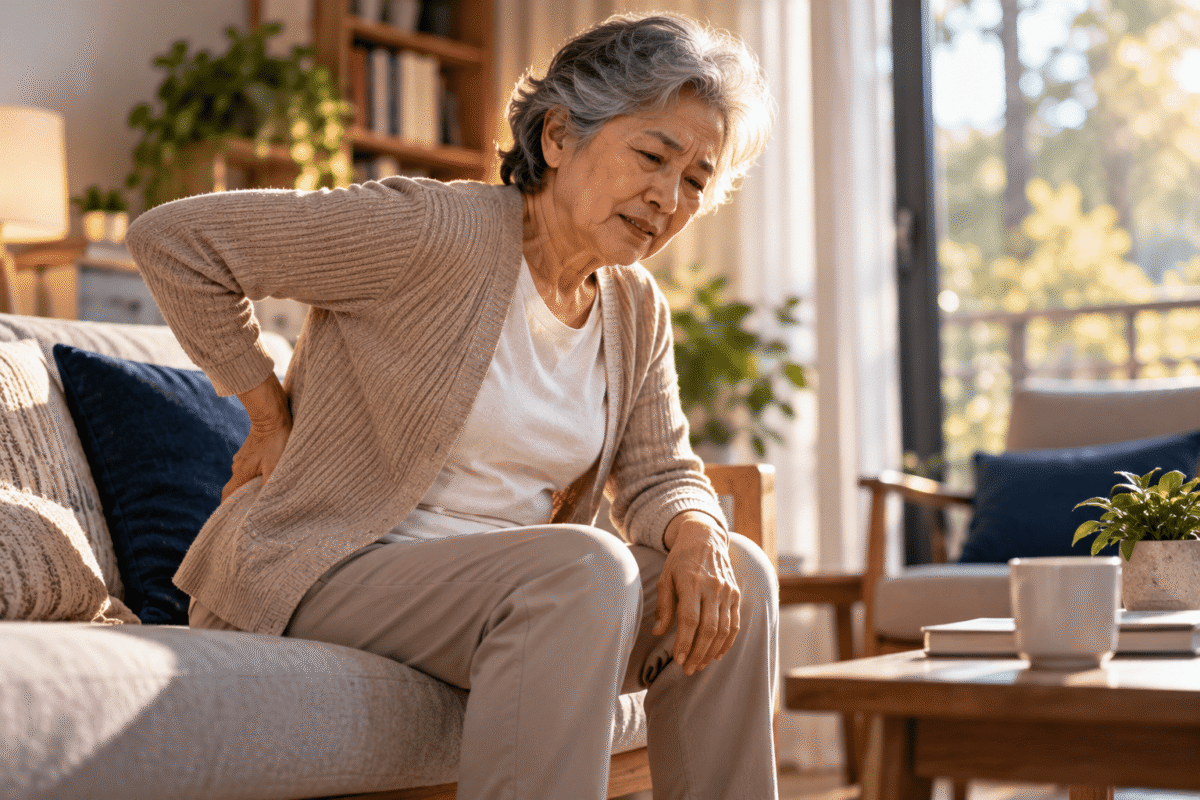
A 72-year-old retired teacher visits the clinic with gradually increasing stiffness and reduced confidence during everyday movement.
There was no recent injury.
“I’m 72 now, so I suppose this is just what happens when you get older. My knees feel stiff in the morning, I’m slower getting out of a chair, and lately I’ve stopped walking as far because I’m worried I’ll make things worse.”
However, over the past year, the client has become less active and now avoids longer walks because the knees and lower back often feel sore afterward. At first, the client assumes age is the main explanation.
But is getting older really the same as losing the ability to move well? That is where the puzzle begins.
Subjective Symptoms
The client reports:
- Morning stiffness in the knees and lower back
- Difficulty rising from low chairs
- Reduced walking distance
- Feeling less steady on stairs
- General weakness compared with previous years
- Fear that exercise may worsen joint pain
Interestingly, the client used to walk most days. However, as discomfort increased, activity gradually decreased.
As a result, pain may not be the only thing affecting function. Reduced movement itself may now be part of the problem.
What It May Feel Like
Older adults may notice:
- Joint stiffness after rest
- Reduced strength or endurance
- Slower movement
- Less confidence with stairs or uneven ground
- Muscle tightness after inactivity
- Balance becoming more challenging
- Longer recovery after demanding activity
Some changes in physical capacity can occur with ageing. However, significant pain, weakness or loss of function should not automatically be dismissed as “just getting old.”
Objective Findings
During assessment, the therapist may identify:
- Reduced strength when standing from a chair
- Limited knee, hip or spinal movement
- Slower walking speed
- Reduced balance during certain tasks
- Muscle tenderness or stiffness
- Difficulty repeating movements that were once easy
For example, the client may manage one sit-to-stand comfortably but struggle after several repetitions.
This provides an important clue: the issue may involve physical capacity, not simply age itself.
*********
What Could It Be Related To?
Pain and reduced mobility in older adults can have many possible explanations.
These may include:
- Osteoarthritis
- Reduced muscle strength
- Reduced physical activity
- Previous injuries
- Persistent pain sensitivity
- Balance or neurological changes
- Other medical conditions
Ageing may influence muscle mass, bone density and recovery. Nevertheless, ageing does not mean the body loses its ability to adapt. Muscles can still become stronger.
Balance can still improve. And physical function can often be rebuilt.
Several factors may contribute to declining function:
- Reduced daily movement
- Long periods of sitting
- Fear of falling or injury
- Previous painful experiences
- Reduced muscle strength
- Poor sleep or fatigue
- Chronic health conditions
- Loss of confidence after illness or injury
For example, knee pain may cause someone to walk less.
Then, because they walk less, leg strength and endurance may gradually decline.
As a result, the same walk can begin to feel even harder.
This creates a cycle:
pain → less movement → reduced capacity → more difficulty moving.
The good news is that this cycle can often be interrupted.
The assessment aims to determine:
- Which daily activities are becoming difficult
- How strength, balance and mobility have changed
- Whether pain is limiting movement
- Whether there is a risk of falling
- Which activities remain safe and comfortable
- Whether medical assessment is needed
The key question is not: “How old is the client?” It is: “What can the client currently do, and what capacity can still be rebuilt?”
Management may include:
- Maintaining regular physical activity
- Progressive strength exercises
- Balance and walking exercises
- Gentle mobility work
- Gradually increasing activity tolerance
- Reviewing environmental fall risks
- Manual therapy when appropriate for symptom relief
- Coordinating with medical or allied health professionals when required
Initially, the client may begin with simple movements such as repeated sit-to-stands, short walks or supported balance exercises. Then, as confidence improves, resistance, walking distance and movement complexity can gradually increase.
Manual therapy may help reduce discomfort temporarily. However, long-term independence depends much more on maintaining strength, balance and regular movement.
How Does It Usually Recover?
Recovery in older adults does not always mean returning to how the body felt at 25. Instead, the goal is to improve what matters now. At first, progress may be small. Standing from a chair more easily. Walking an extra five minutes. Using the stairs with less hesitation. However, these changes add up.
Over time, consistent physical activity and progressive strengthening can improve mobility, confidence and independence, even later in life. For our client, successful recovery may mean being able to:
- Walk further with confidence
- Rise from chairs more easily
- Use stairs more safely
- Maintain balance during daily activities
- Continue gardening, travelling or social activities
- Remain independent for longer
Importantly, temporary soreness after new activity does not automatically mean harm. Nevertheless, sudden unexplained weakness, repeated falls, new neurological symptoms, significant unexplained weight loss, persistent night pain or rapidly worsening function should prompt further medical assessment.
Your Body Talks. Learn to Listen.
Getting older changes the body. But change is not the same as decline. And age is not a diagnosis. Sometimes, the most important treatment is not doing less because you are older.
It is finding the right way to keep doing more. Age changes the starting point. It does not decide the finish line.
Ask it. Even if you think it’s a ridiculous question.
Someone else has probably wondered exactly the same thing.
