
Why Does Adam’s Test Matter?
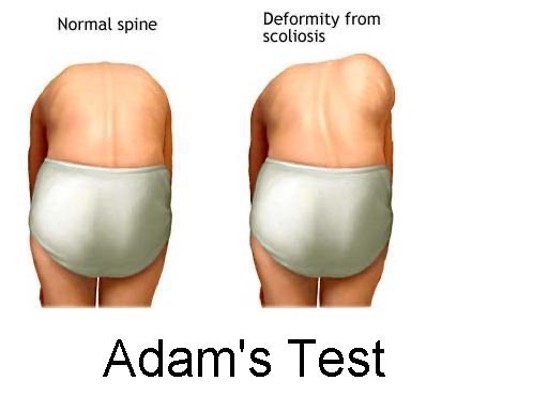
Adam’s Test, also called the Adam’s Forward Bend Test, is a simple screening assessment used to look for trunk asymmetry that may suggest scoliosis.
The test may reveal differences that are difficult to see while standing upright. However, it cannot confirm a diagnosis or measure the spinal curve by itself.
“When I observe asymmetry during this test, I do not assume that I have diagnosed scoliosis. The finding tells me that the person may need a more appropriate medical assessment.”
During Adam’s Test, the person bends forward while the examiner observes the spine, ribs and surrounding trunk.
The Facts
A rib prominence or noticeable difference between the two sides may indicate spinal rotation. A qualified healthcare professional may use a scoliometer to measure trunk rotation and recommend further assessment when appropriate.
Massage therapists can observe and refer, but they cannot diagnose scoliosis from this test alone.
The person stands with the feet together, knees straight and arms relaxed. They slowly bend forward at the waist while allowing the arms to hang toward the floor.
The examiner views the back from behind and looks across the spine and rib cage for asymmetry. The movement should remain comfortable and controlled.
A positive or suspicious finding may include:
- One side of the ribs appearing higher
- Uneven prominence beside the spine
- A visible rib hump
- Noticeable trunk rotation
- Asymmetry that becomes clearer during forward bending
Pain, fatigue and reduced range of motion may provide useful clinical information, but they do not define a positive Adam’s Test.
No. Adam’s Test is a screening tool, not a diagnosis.
Posture, muscle development, leg-length differences and other factors may influence appearance. A healthcare professional may recommend further examination or standing spinal imaging to confirm scoliosis and measure the curve.
Massage cannot straighten a structural spinal curve or reverse scoliosis.
It may help some people manage muscular discomfort, sensitivity or feelings of tension. Treatment should focus on comfort and function rather than claiming to realign the spine.
Exercise, monitoring, bracing or specialist treatment may form part of the management plan, depending on the person’s age, symptoms and curve severity.
Recommend medical or physiotherapy assessment when the test shows clear asymmetry, particularly in a growing child or adolescent.
Further assessment also makes sense when the person experiences worsening deformity, persistent pain, neurological symptoms, breathing difficulty or a significant change in movement or function.
Early assessment does not mean that the person will need surgery or a brace. It provides the information required to make an appropriate decision.
Your Body Talks. Learn to Listen.
When you feel pain, what’s your first reaction?
Ignore it? Take something? Stretch it? Massage it? Or wait three months and hope it magically disappears?
Be honest. We’ve all tried the last one.
Ask it. Even if you think it’s a ridiculous question.
Someone else has probably wondered exactly the same thing.
