Anatomy & Physiology
Every movement, sensation and physical response depends on how the structures and systems of the body work together.
Anatomy and physiology provide the foundation for understanding movement, stability, pain and physical function. Rather than looking only at where discomfort is felt, understanding the body helps us consider which structures are involved, how they interact and what may be contributing to changes in movement or function.

Anatomy
Anatomy tells us what the body is made of.

Physiology
Physiology explains how those structures function and interact.

Structure, Movement & Stability
The body does not function as a collection of separate parts.
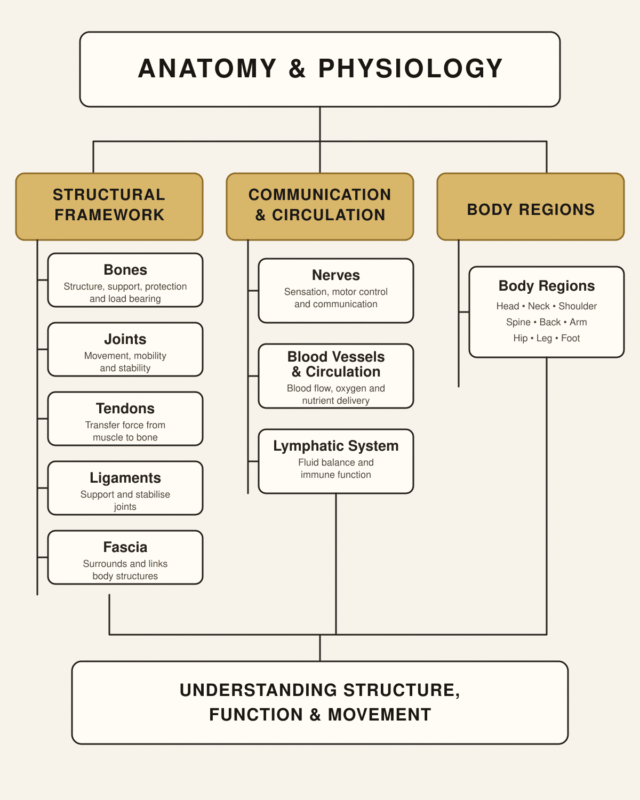
Bones provide the structural framework of the body. They support body weight, protect important organs and provide attachment points for muscles. However, the skeleton cannot actively move or stabilise itself.
Muscles provide active force and control. Through coordinated contraction, muscles move the skeleton, maintain posture, support joint stability and help distribute physical loads.
Around this framework, joints permit movement, tendons transfer muscular force, ligaments contribute to stability, fascia connects and surrounds tissues, and the nervous system coordinates movement and sensation.
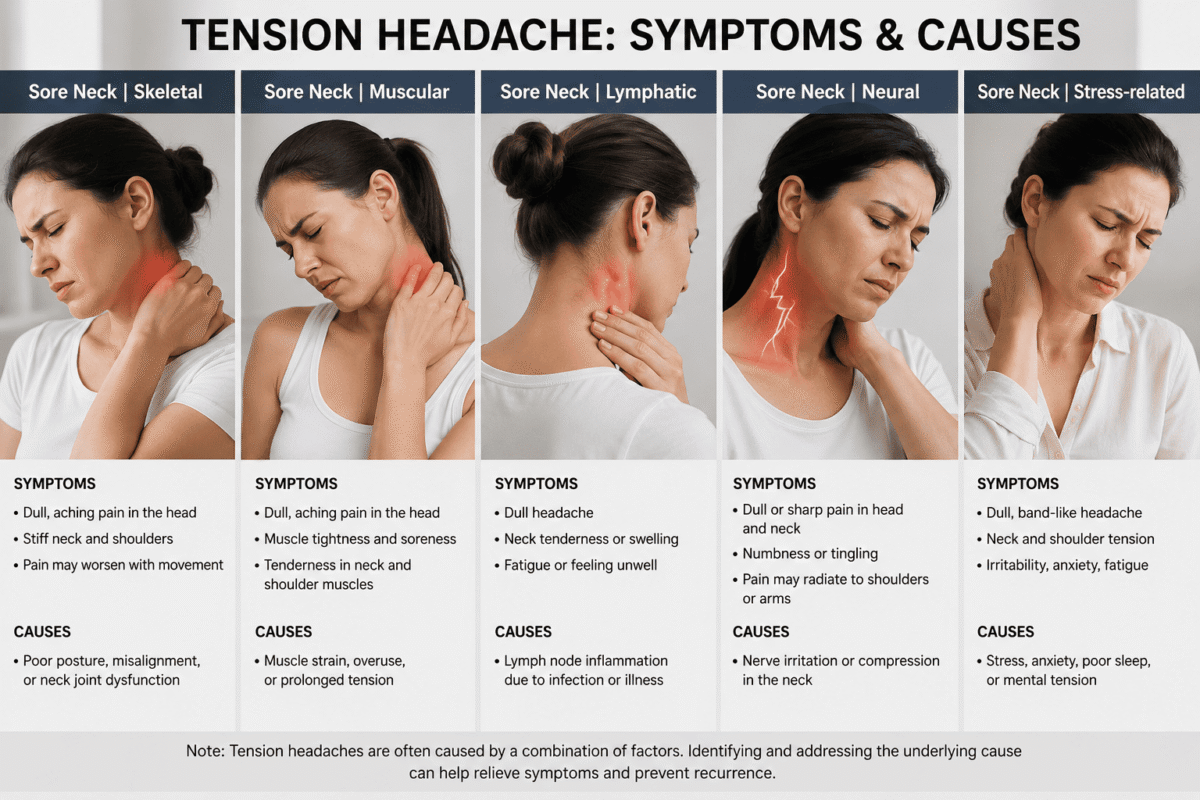
Understanding these relationships is important because where pain is felt is not necessarily where all contributing factors are located.