
You’ve probably heard someone say:
“Massage helps drain toxins through the lymphatic system.”
It sounds convincing. But what does the lymphatic system actually do?
And are there really little bags of toxins waiting to be squeezed out? Not quite.
Think of It as a Fluid Management System
“If swelling is new or unexplained, don’t immediately think about draining it—ask why it is there.”
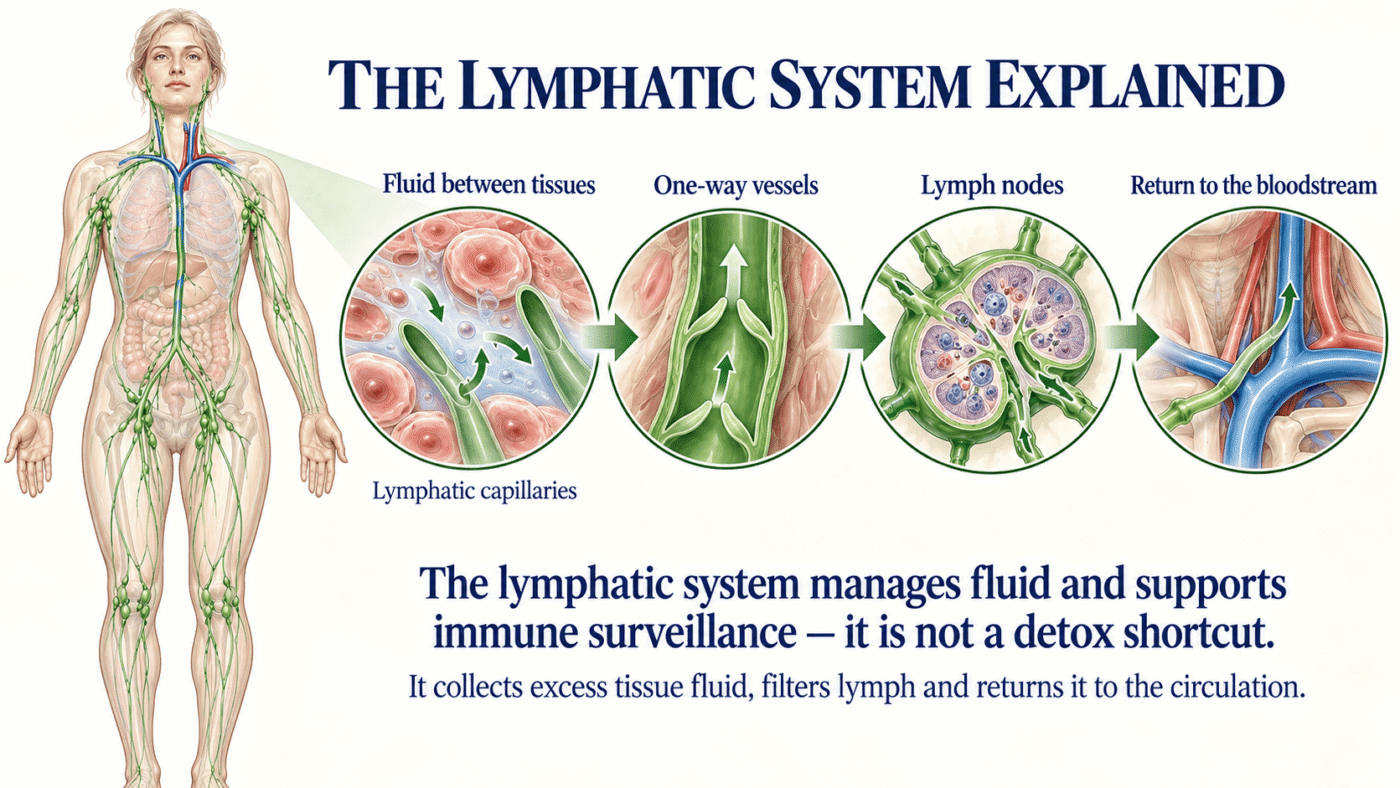
As blood circulates through your body, fluid continually moves between your bloodstream and surrounding tissues. Most of it returns directly to the blood.
But some enters tiny lymphatic vessels. Once inside, we call this fluid lymph.
The lymphatic system collects this fluid and eventually returns it to the bloodstream, helping maintain the body’s normal fluid balance. And unlike your cardiovascular system, it doesn’t have a heart pumping lymph around the body.
Movement, breathing and muscle activity all help lymph move through the system.
So yes — going for a walk is doing something useful.
Movement, breathing and muscle activity
Your body likes movement more than it sometimes lets on.
You’ve probably noticed lymph nodes when you’ve been sick.
Those little tender lumps around your neck? Lymph nodes are small structures positioned along lymphatic vessels.
They help filter lymph and are important meeting points for cells involved in your immune system. That’s why lymph nodes may become enlarged or tender when your immune system is responding to an infection.
And enlarged lymph nodes are certainly not something we should automatically massage.
Sometimes they need medical assessment instead.
Specialised techniques such as manual lymphatic drainage may be used in particular circumstances to support lymph movement and help manage certain types of swelling.
But this is different from saying:
“Massage detoxes your body.”
Your liver, kidneys, lungs and other systems are already working continuously to process and eliminate substances your body doesn’t need.
And lymphatic treatment isn’t appropriate for everyone.
If swelling is new, unexplained, painful or accompanied by other concerning symptoms, the first question shouldn’t be:
“How do we drain it?”
It should be:
“Why is it there?”
You don’t normally feel it.
You don’t need to consciously switch it on. And you certainly don’t need to spend your day worrying about whether your lymph is “blocked.”
Your lymphatic system is quietly helping manage fluid and supporting immune function every day. Learning about it simply helps us recognise when something changes and when that change might deserve attention.
Sometimes understanding the body means knowing what we can help. And sometimes it means knowing when not to touch it.
Your Body Talks. Learn to Listen.
Ever wondered why your lymph nodes seem to appear from nowhere when you’re sick?
Ask below.
They’re usually not as mysterious as they seem.

Ask it. Even if you think it’s a ridiculous question.
Someone else has probably wondered exactly the same thing.
