Treatment Techniques

Understanding Treatment Techniques

A treatment technique is a tool — not a treatment plan by itself.
Massage therapists and manual therapists may use different techniques to influence comfort, movement, muscle tone or the way a person responds to physical loading.

The value of a technique depends on why it is selected, how it is applied and how the person responds.
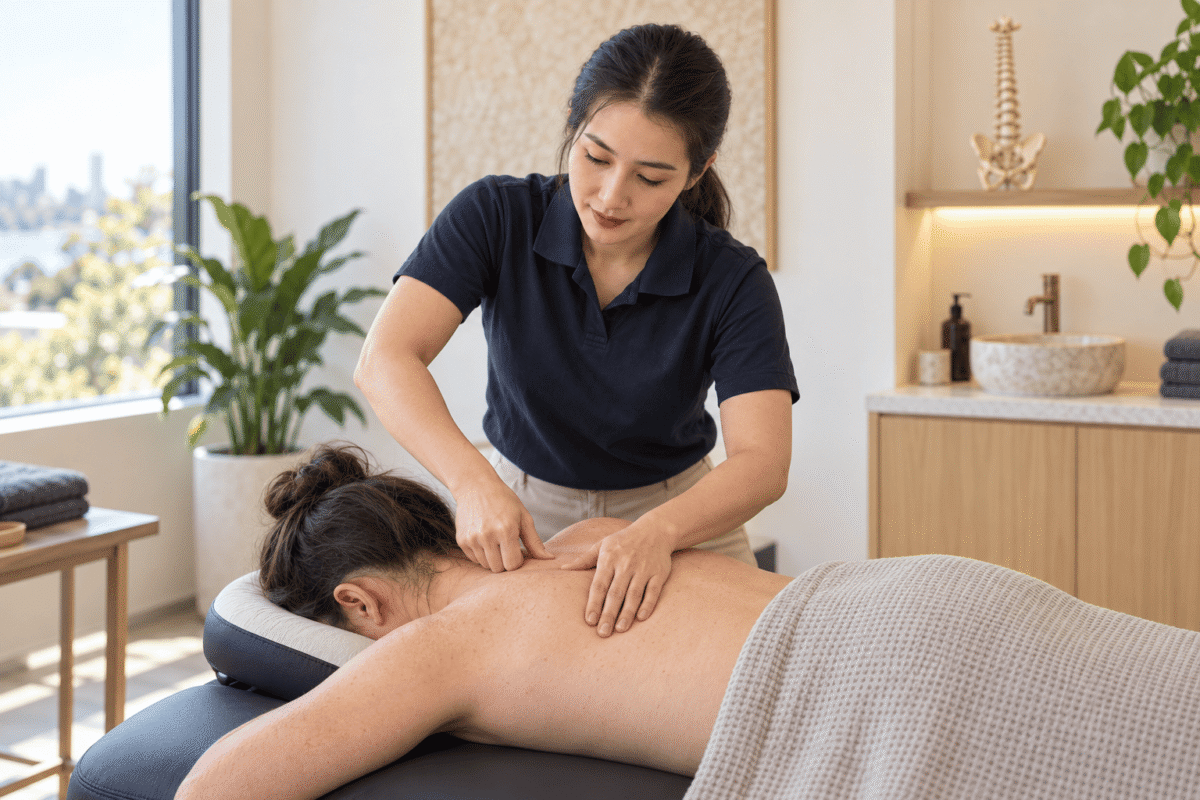
Technique Should Follow Assessment

The same technique can produce different responses in different people.

For this reason, treatment should not be based simply on finding a “tight” area and applying more pressure. Technique selection should consider assessment findings, treatment goals, tolerance, safety and subsequent reassessment.

No individual manual technique should be presented as a universal solution.
What You Need to Understand

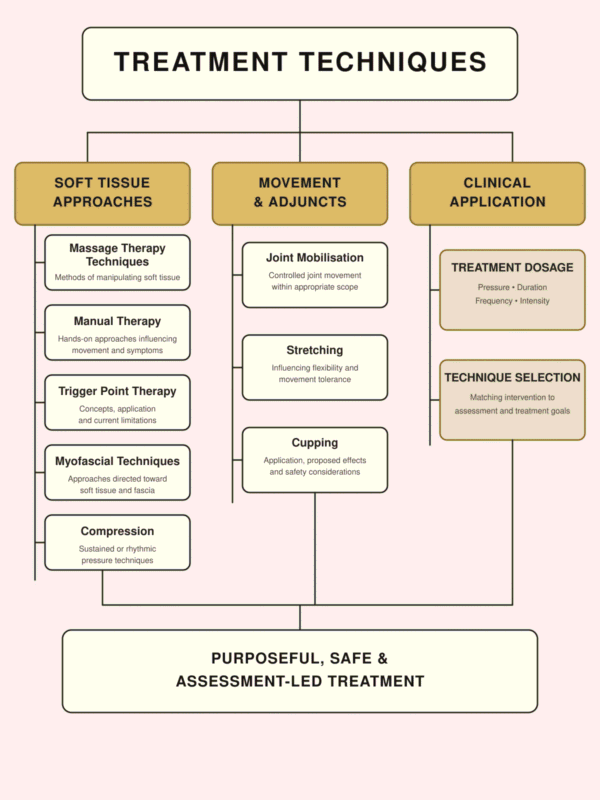
Massage Therapy Techniques — different methods of manipulating soft tissue
Manual Therapy — hands-on approaches used to influence movement and symptoms
Trigger Point Therapy — concepts, application and current limitations
Myofascial Techniques — approaches directed toward soft tissue and fascia
Joint Mobilisation — controlled movement applied to joints within appropriate scope
Stretching — methods used to influence flexibility and movement tolerance
Cupping — application, proposed effects and safety considerations
Compression — sustained or rhythmic pressure techniques
Treatment Dosage — pressure, duration, frequency and intensity
Technique Selection — matching an intervention to assessment and treatment goals


Build Your Understanding

Knowing how to perform a technique is only part of treatment.

Explore Treatment Techniques

Explore the articles below to understand why, when and how different techniques may be used as well as their limitations and safety considerations.

Explore Treatment Techniques →