Joint Mobilisation
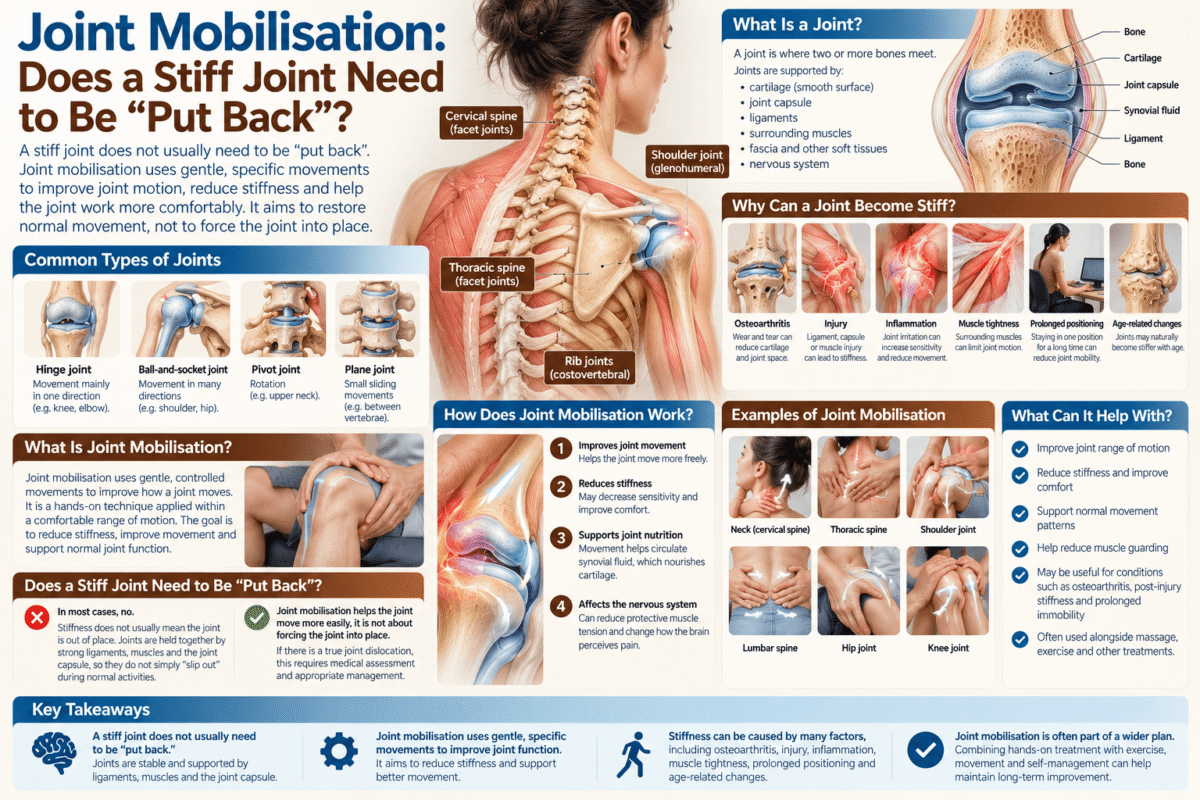
Does a Stiff Joint Need to Be “Put Back”?
That question makes sense when movement feels restricted. However, a stiff or painful shoulder does not automatically mean its bones have moved out of position. The first step is to find out which movement is difficult, what happens when you try it, and whether hands-on treatment is appropriate.
“My shoulder feels stuck. Can you put the joint back in place?”
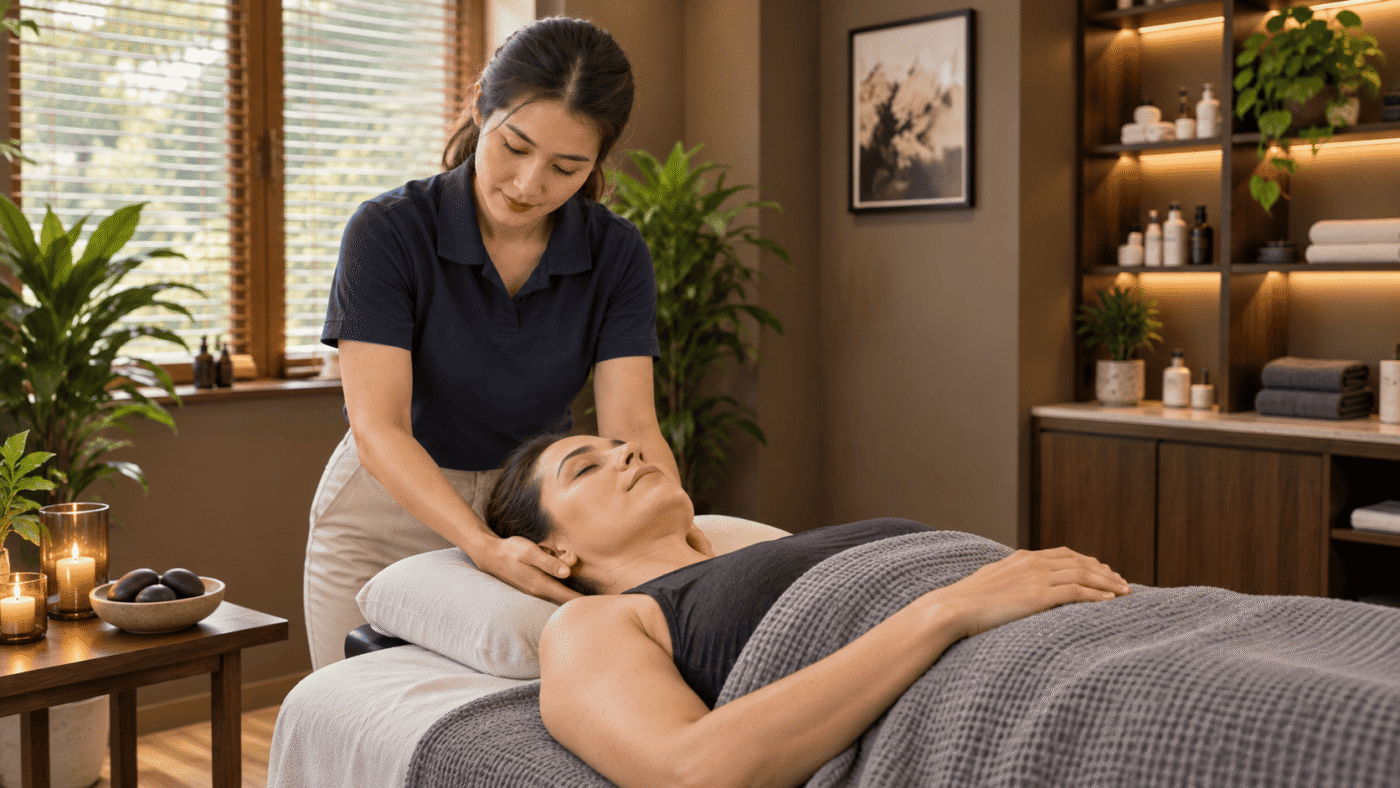
Joint mobilisation is one option a trained clinician may consider. It uses controlled, usually repeated movements applied to a joint. The aim may be to make movement more comfortable or improve the range you can use. For a shoulder, knee or ankle, this may feel like a gentle glide or rhythmic movement.
Is joint mobilisation the same as a joint “crack”?
Usually, when clinicians say mobilisation, they mean a controlled movement that does not rely on a quick thrust. Manipulation commonly refers to a different technique involving a controlled thrust. The exact terms and techniques can vary between professions, so ask your clinician what they intend to do before treatment begins.
A sound is not proof that a joint was “put back”. You can judge a session by a more useful measure: Can you perform the movement that mattered to you with less discomfort or better control?
When might it help?
Imagine that reaching overhead has become difficult. An assessment might include your symptoms, recent injuries, shoulder movement and strength. If joint mobilisation is suitable, the clinician may use it to help you move more comfortably, then guide you through movements you can practice yourself. Physiotherapy guidance describes joint mobilisation as one possible part of care for movement problems.
The technique is not necessary for every stiff joint. A feeling of stiffness can accompany pain, weakness or other conditions, so treatment should follow an assessment rather than the assumption that a joint must be forced farther.
Will hands-on treatment fix the problem by itself?
The value of joint mobilisation depends on your condition and goals. For low back pain, NICE recommends considering manual therapy, including mobilisation, as part of a plan that includes exercise. That is a useful principle for patients: ask what you will be able to practice between sessions, and how you will know whether the treatment is helping.
A practical goal might be reaching a shelf, walking downstairs or turning to check behind you. Reassessing that task gives you more information than the sensation of being “looser” immediately after treatment.
What should you tell the clinician first?
Mention a recent fall or injury, a joint that is unusually swollen or hot, known instability, or new numbness or weakness. Tell them if a movement sharply increases your pain. These details may change the assessment or mean you need medical care before hands-on treatment.
If a joint is visibly deformed after an injury, you cannot use or bear weight on it, or you feel unwell with a hot, swollen joint, seek prompt medical assessment.
From a therapist: “The goal is not to make a joint move as far as possible. It is to help you move in a way that is comfortable, useful and appropriate for your condition.”
Your Body Talks. Learn to Listen.
Joint mobilisation is a measured hands-on technique, not a way to “put every stiff joint back”. Good care begins with assessment, explains the technique before using it, and checks whether it improves a movement that matters to you.
Ask it. Even if you think it’s a ridiculous question.
Someone else has probably wondered exactly the same thing.
