
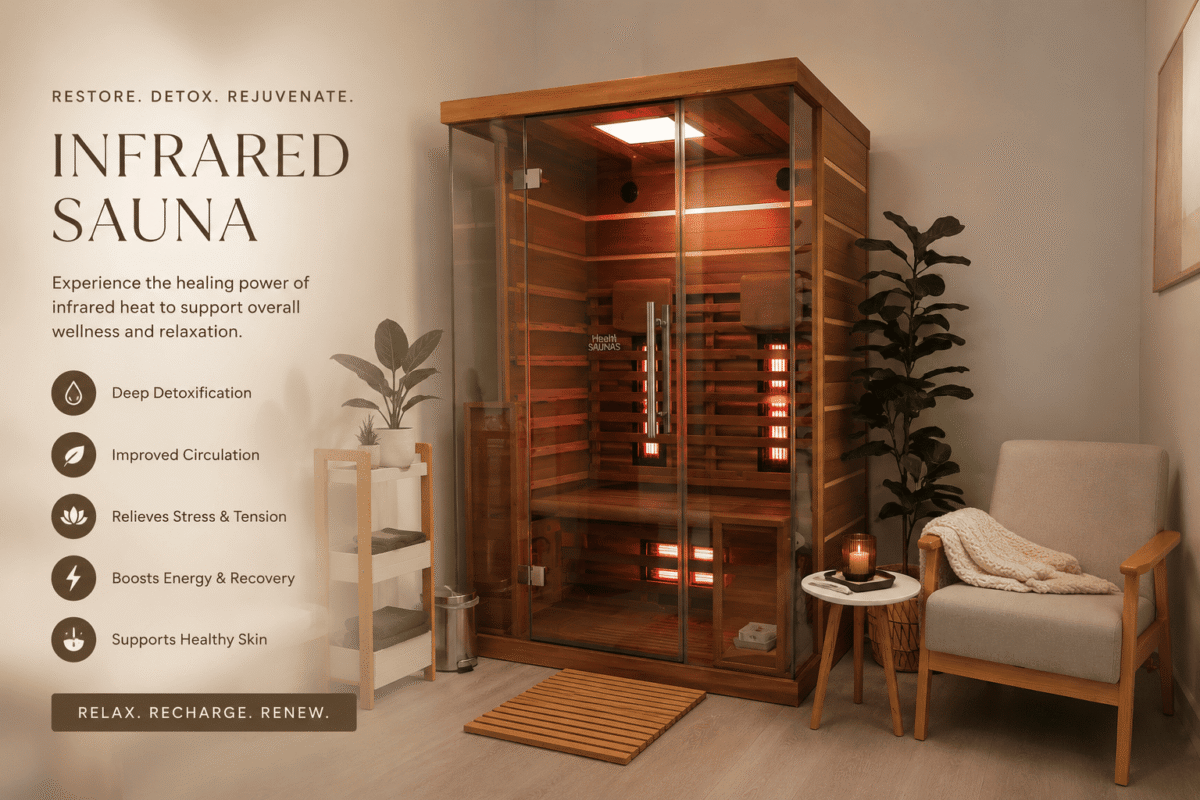
Infrared Sauna
Enjoy the Heat Without Believing the Hype
Sauna advertisements often make sweat look like the result you are supposed to achieve. The longer you stay and the more you sweat, the better the session must be. Right?
“I didn’t sweat much. Did it still work?”
Sweating shows that your body is responding to heat. It does not measure how many “toxins” you have removed or how much healthier you have become. You can choose an infrared sauna because you enjoy the warmth and quiet time, while still paying attention to how your body feels.
How does an infrared sauna work?
An infrared sauna uses infrared heaters to warm the body. By comparison, a conventional sauna heats the surrounding air more directly. Infrared saunas commonly operate at a lower air temperature, although the experience still involves significant heat.
How warm it feels will depend on the equipment, settings and your own response. As a result, the session should be guided by comfort and safety rather than by a target amount of sweat.
This person expects the sauna to cleanse the body. If they leave without sweating heavily, they may feel disappointed.
Your body already has systems that process and remove waste. Although sweating helps regulate body temperature, a sweaty session is not proof of detoxification. It is more honest to describe the sauna as a heat experience than as a medical cleanse.
Another person enjoys the first part of the session but stays after they begin to feel light-headed. They assume that leaving early means they have missed the benefit.
Heat tolerance differs between people and can change from day to day. Therefore, a longer session is not automatically a better one. Follow the facility’s guidance, start conservatively if you are new to saunas and leave if you feel unwell.
This person likes the warmth and the chance to step away from a busy day. They are not trying to achieve a particular amount of sweat.
That is a reasonable goal. Notice whether the temperature feels comfortable, take breaks as needed and allow yourself time to cool down afterwards. The experience does not need an exaggerated health claim to have value to you.
*********
Can a sauna replace treatment or exercise?
No. Warmth may be enjoyable, but a sauna cannot diagnose a concern or replace an appropriate treatment plan. If you are using it because of a symptom, discuss that symptom with a qualified health professional.
Both expose you to heat, but they deliver it differently. A traditional sauna mainly heats the air around you, while infrared heaters warm the body more directly. Neither type makes it sensible to ignore dizziness or other signs that you need to leave.
No. Sweat is part of temperature regulation. The amount varies between people and does not provide a reliable score for the value of your session.
A lower number on the scale immediately after a sauna is largely related to fluid loss. It should not be presented as fat loss. Rehydrate afterwards and judge the experience by how you feel, not by a temporary change in weight.
Follow the guidance for the equipment you are using. If you are new to heat exposure, begin with a shorter session and pay attention to your response. Leave promptly if you feel dizzy, faint, nauseated or otherwise unwell.
Heat and sweating can increase fluid loss, so make sure you have access to water and rehydrate afterwards. If a clinician has advised you to limit fluids, ask them how to manage heat exposure safely.
Check with a healthcare professional first if you are pregnant, have a heart or blood pressure condition, have a condition or medication that affects your response to heat, or are unsure whether a sauna is suitable. Pregnancy guidance commonly advises avoiding heated leisure facilities because of overheating and fainting risks.
Your Body Talks. Learn to Listen.
Use the sauna to enjoy the warmth, not to compete with the clock or the person in the next room. The most useful decision during any session is knowing when you feel comfortable and when it is time to leave.
Ask it. Even if you think it’s a ridiculous question.
Someone else has probably wondered exactly the same thing.
