
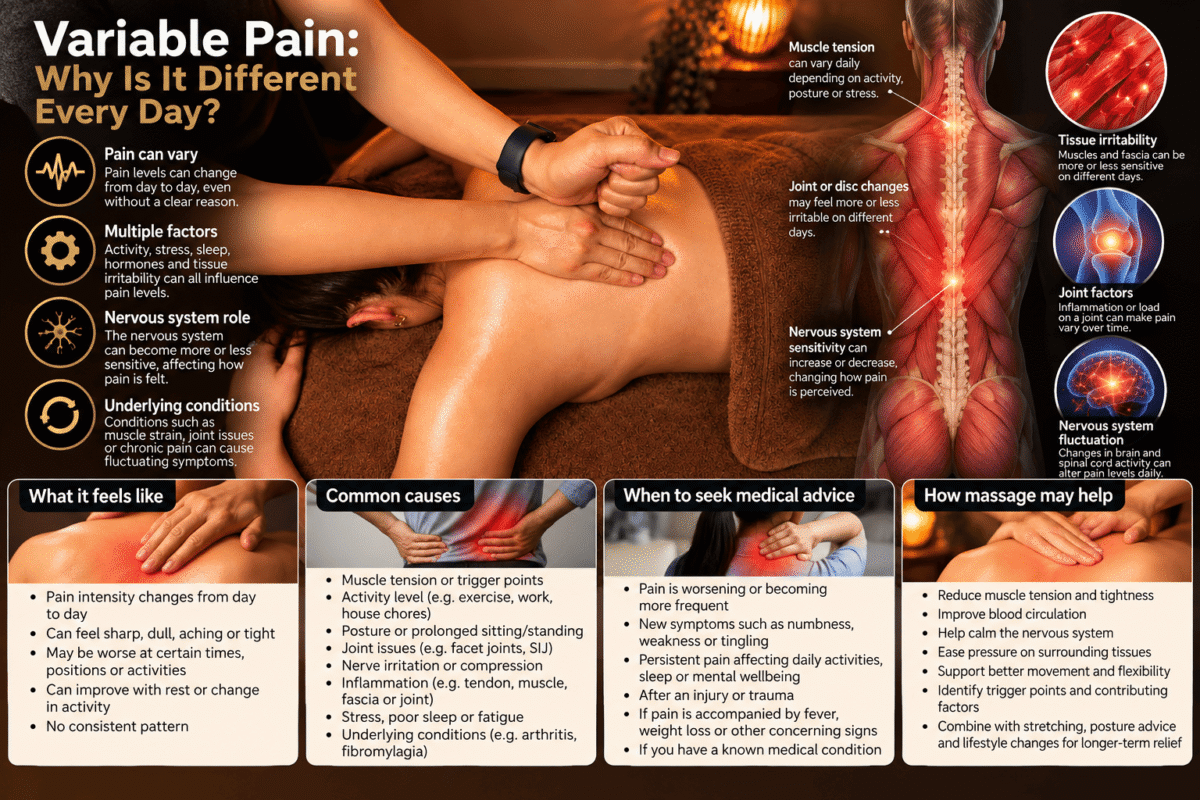
Variable Pain
Why Is It Different Every Day?
The pain may change in intensity, move between nearby areas or respond differently to an activity you have done before. That can make it difficult to explain and frustrating when someone expects you to give one fixed pain score.
“Yesterday I could move normally. Today the same movement hurts.”
As a therapist, I want to understand what changes and what stays consistent. Variable pain is a pattern, not evidence that the pain is imagined. Pain is a personal experience influenced by biological, psychological and social factors; your report deserves to be taken seriously.
What does variable pain feel like?
Variable pain changes over time. You might wake with a mild ache, feel more discomfort after a busy afternoon and improve again the next day. Its intensity, location or triggers may shift.
This differs slightly from intermittent pain, which describes episodes separated by periods with little or no pain. Variable pain may never disappear completely it simply does not behave the same way every day.
To describe the pattern, note:
- What changes: intensity, location, type of pain or activity tolerance?
- Does it follow sleep, exercise, work or a change in routine?
- How long does a flare-up last?
- Is your overall ability to move and function improving or declining?
- Have any new symptoms appeared?
A few brief notes are usually more helpful than trying to remember every detail at your next appointment.
What may cause variable pain?
There is no single cause. Symptoms from an injury or a musculoskeletal condition can change as activities and demands change. Persistent pain can also vary in severity from person to person and from one period to another. A flare-up does not automatically mean new tissue damage, but that does not mean every change should be ignored.
One difficult day should be viewed alongside the longer trend. For example, are flare-ups becoming shorter and less disruptive, even if they still happen? Or is the pain spreading, intensifying and limiting more activities? Those are different stories and may call for different decisions.
When should you seek medical care?
Arrange an assessment if the pattern changes substantially, symptoms keep worsening or daily function is declining. New weakness, loss of sensation, or changes in bladder or bowel control with back pain require urgent medical attention. In Australia, call 000 for sudden loss of limb movement or sensation or loss of bladder or bowel control.
What are the treatment options?
Treatment depends on the underlying problem, but a plan for variable pain should account for better and worse days. A clinician may help you adjust activity, gradually build capacity and decide which changes are expected and which warrant reassessment. Care for persistent pain may involve several approaches tailored to the person.
Choose a measure that matters in daily life: how long you can sit comfortably, how far you can walk or whether you can return to exercise. Then look at the trend over weeks rather than judging everything by one good or bad day.
Can massage help variable pain?
Massage may give short-term relief for some musculoskeletal conditions, but it should respond to how you are presenting today. A pressure level that felt comfortable last week may be too much during a flare-up. Evidence for massage across pain conditions is mixed, and relief does not by itself explain why pain varies.
Before treatment, tell your therapist what has changed since the last visit. Together, you can adjust the technique, pressure or treatment goal, then check your response afterward. If a familiar flare-up behaves differently or comes with new concerning symptoms, reassessment or medical advice takes priority.
From the therapist: “I won’t judge your progress by today alone. Let’s look at what you can do across several weeks and how often the difficult days interrupt it.”
Your Body Talks. Learn to Listen.
Variable pain is real and worth tracking. Changes in function and the longer-term pattern tell us more than a single pain score.

Ask it. Even if you think it’s a ridiculous question.
Someone else has probably wondered exactly the same thing.
