
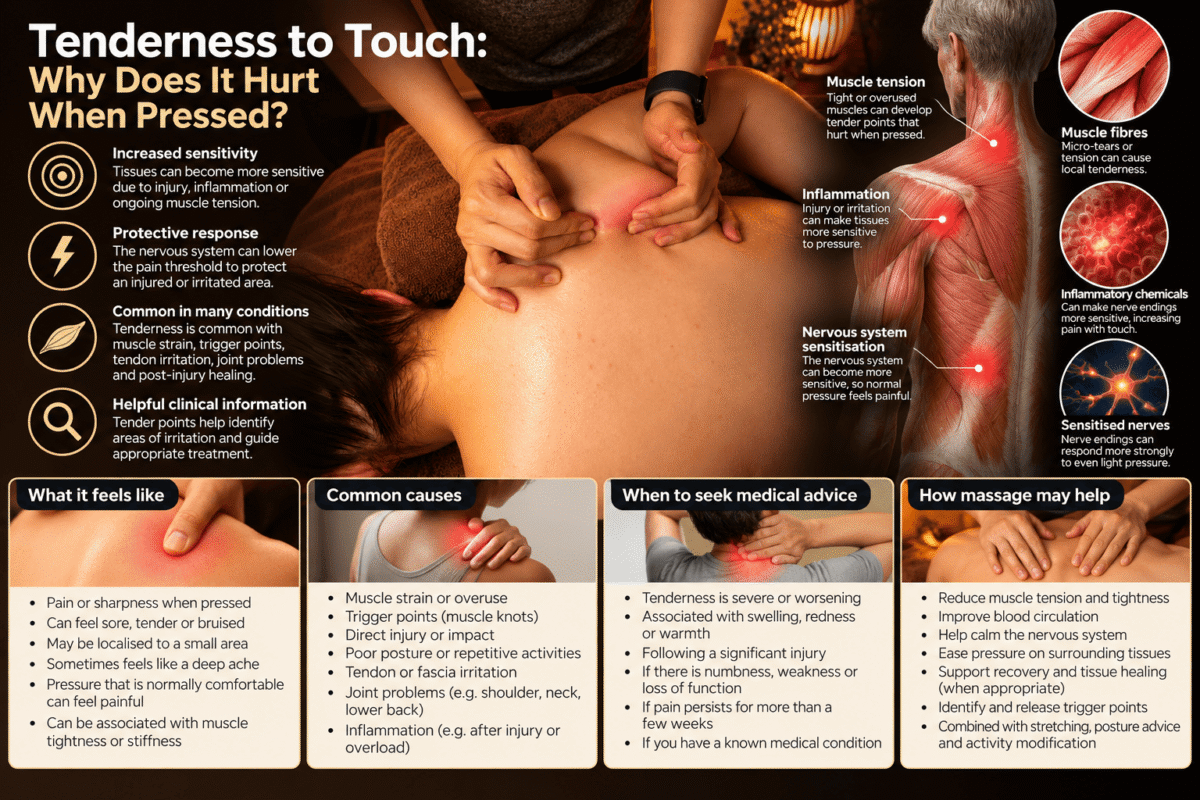
Tenderness to Touch
Why Does It Hurt When Pressed?
That is useful information. Tenderness tells us that an area responds painfully to touch or pressure. It does not, by itself, tell us that a muscle has a “knot,” that tissue is damaged or that deeper pressure will fix it.
“It doesn’t bother me until someone presses right there.”
As a therapist, I would first ask whether the tenderness appeared after an activity or injury, how much pressure brings it on, and whether there is swelling, warmth or pain even when the area is untouched.
What does tenderness feel like?
Tenderness is discomfort or pain when an area is touched or pressed. It may be confined to a small spot or spread across a broader region. For some people, only firm pressure hurts. For others, even light touch is uncomfortable.
That distinction helps separate tenderness from spontaneous pain, which occurs without anyone touching the area. It is also useful to notice:
- Is the spot sore during normal movement?
- Is there bruising, redness, swelling or warmth?
- Is the tenderness new, improving or getting worse?
- Does pressing it reproduce your familiar complaint, or just create a new pain?
A therapist finding a tender spot is an observation, not a complete diagnosis.
What may cause tenderness?
Tenderness may follow exercise, overuse or an injury. It can also occur with an inflamed joint, a skin problem or a broader increase in pain sensitivity. For example, some people with fibromyalgia find even slight touch painful. The location, history and other symptoms determine what needs consideration.
Pressing harder to “find the cause” is unreliable. Many healthy areas will hurt if pressed firmly enough. A tender point becomes more informative when considered alongside what you report, how you move and whether the area has visibly changed.
When should you seek medical care?
See a doctor if tenderness is severe, worsening, follows a significant injury or does not improve. Red, hot, swollen and painful skin, especially with fever, needs prompt assessment for possible infection.
A sore calf with new swelling or redness also needs medical assessment. A deep vein thrombosis can cause calf or thigh pain and swelling; do not massage the area while waiting to have it checked.
What are the treatment options?
Treatment depends on why the area is tender. A clinician may ask when it began, examine the area and check relevant movement or function. A minor exercise-related soreness may need time and an adjustment to activity. An infection, joint problem or another medical condition needs a different plan.
When tracking progress, look beyond whether a spot hurts under a thumb. Ask whether ordinary touch is more comfortable, whether movement has improved and whether the original reason you sought care is changing.
Can massage help tenderness?
Sometimes, when assessment suggests massage is suitable. A therapist may work gently on a sore muscle or surrounding areas and adjust pressure based on your response. Massage may help some types of musculoskeletal pain, although the evidence varies and relief may be short term.
The aim is not to make a tender spot hurt until it “releases.” If pressure makes you brace, hold your breath or feel worse afterward, that information should change the technique. Massage should be avoided over an unexplained hot, swollen area or a calf that may have a blood clot.
From the therapist: “A tender spot tells me where to ask more questions. It does not give me permission to press harder.”
Your Body Talks. Learn to Listen.
Tenderness is one finding among many. What caused it, what accompanies it and how it affects normal activity matter more than how painful the area becomes under pressure.

Ask it. Even if you think it’s a ridiculous question.
Someone else has probably wondered exactly the same thing.
