Cervical Spondylosis
Does “Wear and Tear” Mean My Neck Is Damaged?
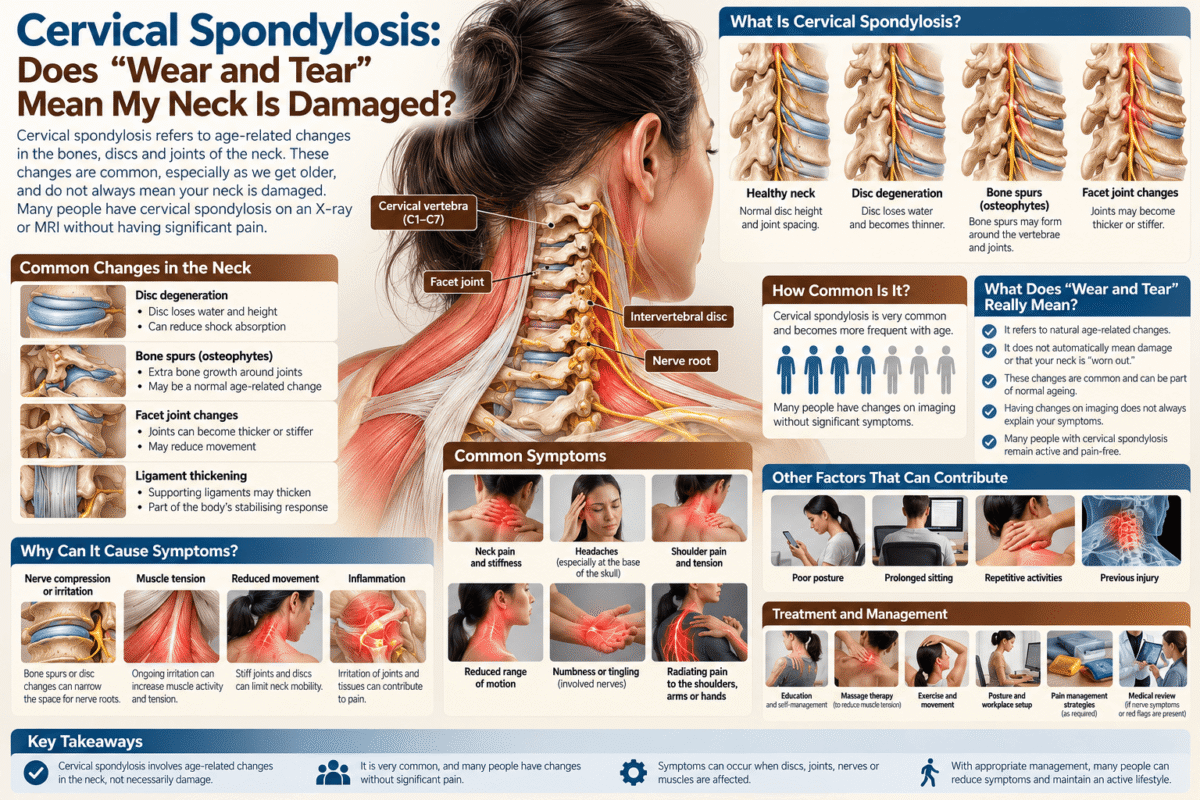
The result may help explain your symptoms, but it does not answer the question on its own. Cervical spondylosis describes changes in the discs, joints and bones of the neck that commonly develop over time.
“My scan says I have cervical spondylosis. Is that why my neck hurts?”
Some people experience neck pain or stiffness; others have similar changes on a scan and feel fine. What matters next is how you feel, how you move, and whether your nerves are affected.
What might you notice?
Neck pain and stiffness can make turning your head or looking up uncomfortable. You may also feel pain around the shoulders. Symptoms can vary from day to day, so a difficult morning does not necessarily mean that the changes in your spine have suddenly become worse.
Pain, tingling, numbness or weakness that travels into an arm or hand deserves closer assessment. These symptoms can occur when a nerve in the neck is irritated, although they can have other causes too. A therapist should not decide which nerve is involved from the location of pain alone.
If a scan shows spondylosis, what should you ask?
A useful first question is: “Do the findings match my symptoms and examination?” Your clinician may ask when the symptoms began, whether they travel into your arm, and which activities make them better or worse. They may also assess neck movement, strength, sensation and reflexes when appropriate.
This matters because the name on a scan describes a structural finding. It does not, by itself, measure how much pain you should feel or determine the treatment you need.
What are the treatment options?
Treatment depends on your symptoms and their effect on daily life. Many people start with non-surgical care, which may include advice about activity, exercise or physiotherapy, and medication when appropriate. A clinician can help decide whether further investigation or specialist care is needed, particularly when nerve symptoms are present or worsening.
You can also observe patterns that make conversations about care more useful: Can you turn your head more easily at certain times? Does an activity bring on arm symptoms? Are you avoiding movement because it hurts or because you fear damaging your neck? Write down meaningful changes rather than judging progress from one painful day.
Can massage help?
Massage may offer some people relief from neck and shoulder discomfort. It can be used as part of a broader care plan, with pressure and positioning adjusted to what feels comfortable. However, massage does not reverse the changes seen on a scan, and research does not show a reliable lasting benefit for every person with neck pain.
Before a session, tell your therapist about arm tingling, numbness, weakness or any change in coordination. Those symptoms may call for medical assessment rather than a stronger massage.
When should you seek urgent help?
Seek urgent medical care if you develop new or worsening weakness, difficulty walking or keeping your balance, loss of hand coordination, or new bladder or bowel control problems. These can be warning signs of spinal cord involvement and should not be managed as routine muscle tightness.
From a therapist: “A scan tells us what your neck looks like. Your symptoms and examination tell us what needs attention today.”
Your Body Talks. Learn to Listen.
Cervical spondylosis is a common finding, and it does not automatically mean serious damage. Use the scan as one piece of information, pay attention to changes in function and nerve symptoms, and choose care based on the full picture.

Ask it. Even if you think it’s a ridiculous question.
Someone else has probably wondered exactly the same thing.
