
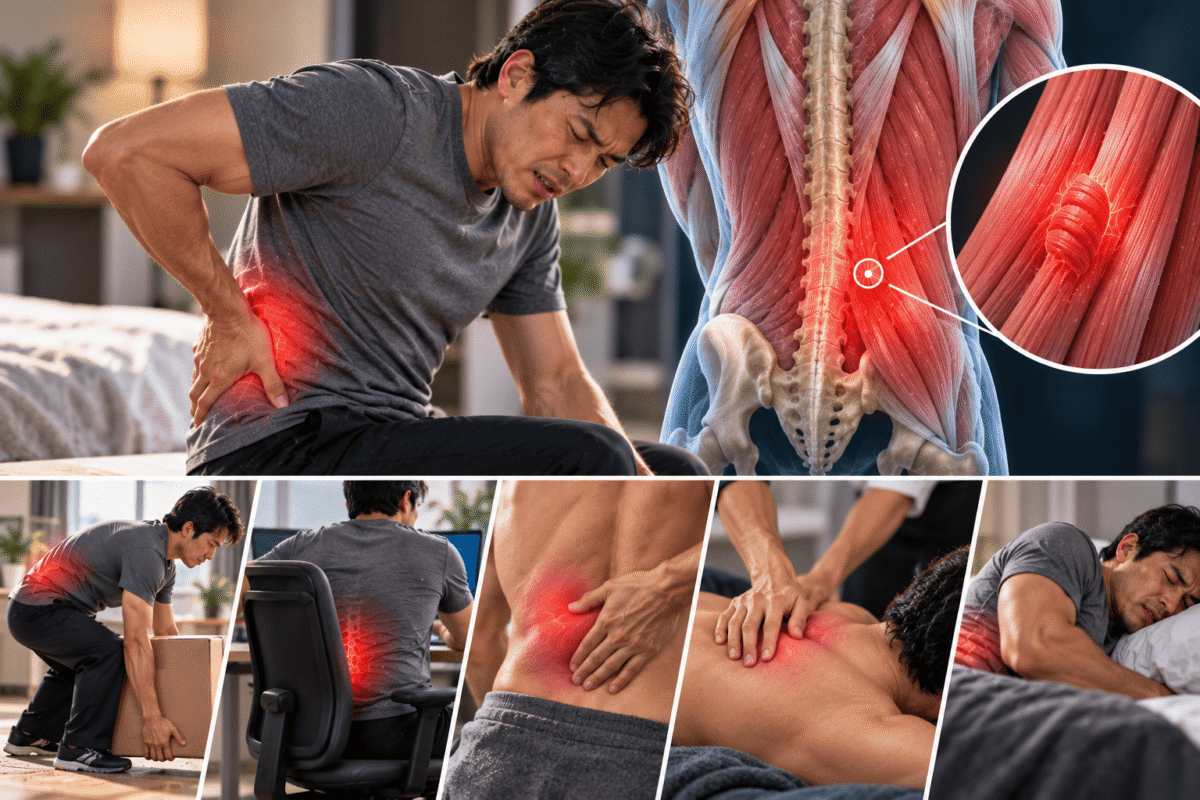
Muscle Spasm
Example Case
A 39-year-old gardener visits the clinic with sudden lower-back pain and stiffness.
The client explains that everything felt normal earlier that morning. However, while bending forward, a sharp tightening sensation appeared across the lower back.
Since then, even simple movements have become uncomfortable.
“I was just bending down to pick something up when my back suddenly tightened. It felt like the muscles locked, and I couldn’t straighten up properly. I didn’t lift anything heavy, so why did this happen? I’m almost afraid to move now.”
So, did the muscle suddenly become damaged, or is the body responding to something else?
That is the first piece of the puzzle.
Subjective Symptoms
The client reports:
- Sudden tightening across the lower back
- Pain when bending or standing upright
- A feeling that the muscles are locked
- Difficulty moving normally
- Temporary relief when resting
- No reported leg numbness or weakness
Initially, the client believes a muscle must have torn. However, sudden pain and restricted movement do not necessarily indicate structural damage.
What It May Feel Like
People experiencing muscle spasms or muscle guarding may notice:
- Sudden, involuntary muscle tightening
- Sharp or cramping pain
- A hard or tight sensation in the affected area
- Difficulty relaxing the muscle
- Restricted or painful movement
- Discomfort that comes and goes
- Muscle tenderness afterward
Sometimes, a true muscle cramp lasts only seconds or minutes. In contrast, protective muscle guarding and associated discomfort may persist longer.
Although these sensations can feel similar, they do not always have the same explanation.
Objective Findings
During assessment, the therapist may identify:
- Reduced lumbar range of motion
- Pain during bending or straightening
- Local muscle tenderness
- Guarded or cautious movement
- Increased resistance during certain movements
- No obvious neurological changes during appropriate screening
Interestingly, the client may move more comfortably when supported or performing smaller movements. However, palpating a tight muscle alone cannot confirm that an involuntary spasm is occurring. This leads to the next question: Why is the movement so restricted?
*********
What Could It Be Related To?This is a headline
A muscle spasm is an involuntary muscle contraction that may cause sudden tightness, discomfort or pain. However, the sensation of a muscle being locked can also involve protective muscle guarding, where movement becomes restricted in response to pain or perceived threat. Possible explanations include:
- Muscle fatigue or overuse
- Local muscle irritation
- Pain-related protective guarding
- Acute non-specific lower-back pain
- Dehydration or electrolyte disturbances in some cramping conditions
- Less commonly, neurological or other medical conditions
Therefore, identifying a tight muscle is only part of the assessment. Sometimes, muscle tightness is a response to pain rather than the original cause of it.
Several factors may influence symptoms:
- Unfamiliar or repetitive physical activity
- Heavy or sustained muscle loading
- Inadequate recovery
- Prolonged uncomfortable positions
- Physical fatigue
- Dehydration, particularly with heat or heavy sweating
- Previous episodes of back pain
For example, our gardener may have spent several hours bending, carrying equipment and working in awkward spaces. Although the painful movement occurred while picking up a small object, the overall physical demands of the day may be relevant.
Nevertheless, the final movement is not necessarily the cause of the problem. It may simply be when the symptoms became noticeable.
The assessment aims to determine:
- When and how the symptoms began
- Which movements reproduce the pain
- Whether true cramping or protective guarding is more likely
- Whether muscle, joint or nerve-related problems may be involved
- Whether there are signs requiring medical attention
- How normal movement and daily function are affected
Most importantly, the therapist wants to answer: “Is the muscle itself the problem, or is it reacting to another source of pain?”
Understanding that distinction can prevent unnecessary or inappropriate treatment.
If serious conditions have been excluded, management may include:
- Gentle movement within a comfortable range
- Temporary modification of painful activities
- Heat for short-term comfort
- Gradually returning to normal activities
- Appropriate mobility and strengthening exercises
- Manual or soft-tissue therapy when suitable
- Reviewing workload, fatigue and recovery
Initially, the priority is to reduce discomfort and help the client move with greater confidence. As movement improves, everyday activities can gradually be restored.
However, aggressive stretching or deep pressure over a highly painful area may worsen symptoms and is not automatically appropriate. The therapist should then reassess:
Can the client bend more comfortably?
Is standing upright easier?
Is the fear of movement beginning to settle?
These changes provide more useful information than muscle tenderness alone.
How Does It Usually Recover?
Most ordinary muscle cramps resolve quickly, although temporary soreness may remain afterward. However, when the feeling of being locked is associated with acute non-specific lower-back pain, improvement may take several days or weeks. At first, reducing aggravating activities may help settle the discomfort.
Nevertheless, prolonged bed rest is generally not recommended for uncomplicated lower-back pain.
Instead, gentle movement and maintaining normal activities within tolerance can support recovery. For our gardener, this may involve short walks, comfortable bending movements and a gradual return to gardening tasks. Over time, successful recovery means being able to:
- Bend and straighten comfortably
- Walk and move without excessive guarding
- Lift everyday objects confidently
- Return to normal work
- Maintain strength and movement tolerance
If spasms become frequent, severe, unexplained or persistent, further medical assessment is appropriate. New or progressive weakness, fever with significant back pain, or symptoms following major trauma also require prompt assessment. Loss of bladder or bowel control or numbness around the saddle region requires emergency care.
Your Body Talks. Learn to Listen.
When your back suddenly locks, your first instinct may be to stop moving. But not every painful contraction means something is torn or damaged. Sometimes, what feels like the problem may actually be the body’s response to another problem.
Don’t just fight the tightness. Understand why it’s there.

Ask it. Even if you think it’s a ridiculous question.
Someone else has probably wondered exactly the same thing.
