
What Is the Difference Between Acute and Chronic Pain?
Why Does It Matter?
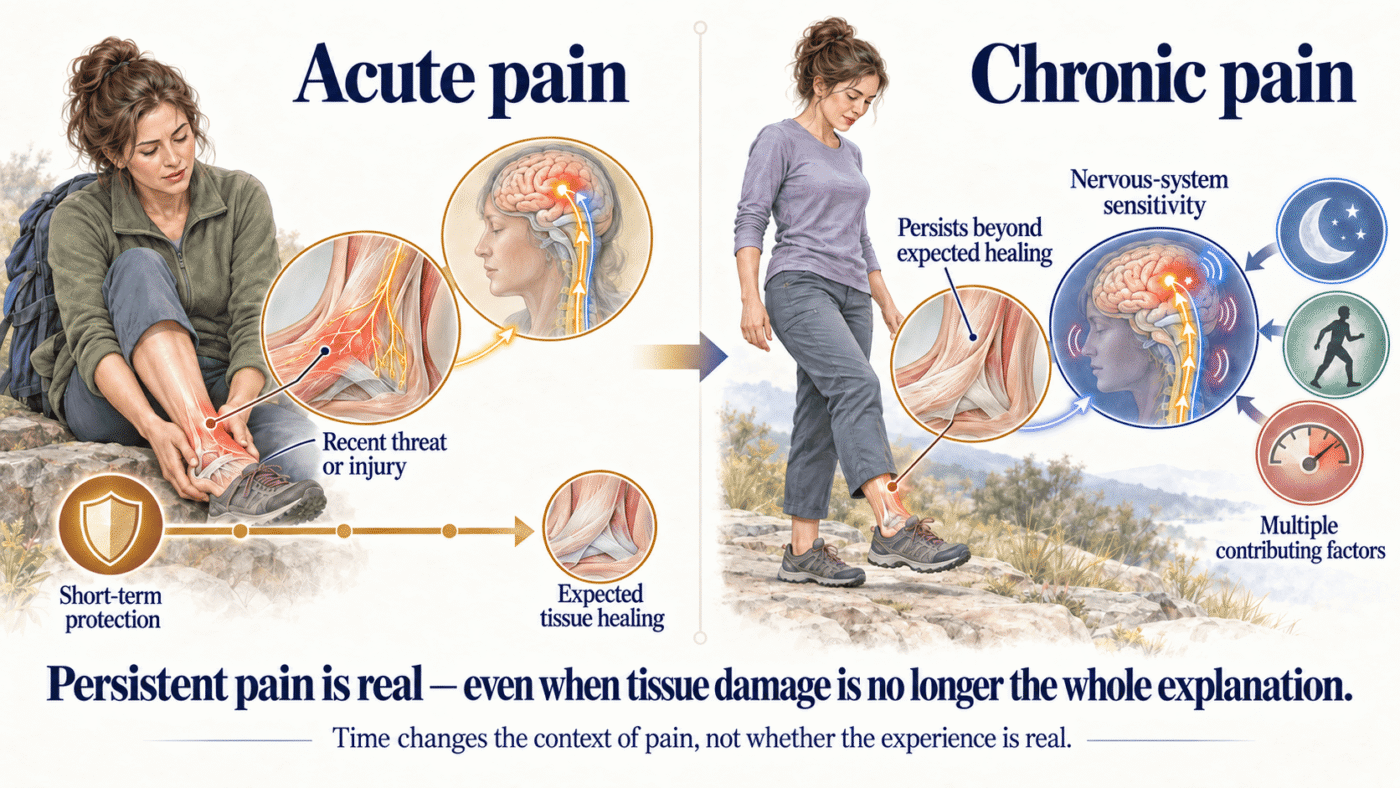
Acute pain and chronic pain may feel equally real, but they do not always mean the same thing or require the same approach. Understanding the difference can help you decide when to protect an area, when to begin moving again and when further assessment may be needed.
“When I assess pain, I do not look only at where it hurts or how strong it feels. I also want to know when it started, how it affects your movement and what has changed in your daily life. Those details help me decide whether massage is appropriate and what we should measure afterwards.”
Acute pain usually begins recently and often changes as an injury or illness recovers. Chronic pain commonly describes pain that continues or repeatedly returns for more than three months.
The Facts
Pain intensity does not reliably show how much tissue damage exists. Persistent pain is real, but it may be influenced by several factors, including the nervous system, movement, sleep, stress, health and previous experiences.
Chronic pain generally refers to pain that persists or recurs for longer than three months. And this is where things become more complicated.
When pain continues for a long time, the original tissue problem may no longer completely explain what someone is experiencing. The nervous system itself can change.
It may become more responsive or protective, and movements or activities that once felt normal may begin to feel painful or threatening. That doesn’t mean the pain is imaginary.
Acute pain usually begins recently and may follow an injury, illness, surgery or sudden increase in physical activity.
Examples include an ankle sprain, a recent muscle strain, pain after surgery or sudden lower back pain. The symptoms often change as the body recovers, although stronger pain does not always mean more serious damage.
Temporary activity modification may help, but complete rest is not always necessary.
Imagine your back hurts every time you bend. So you stop bending. Then you stop exercising. You move less. You become worried that certain movements might damage your back.
Months later, the original problem may have changed but your relationship with movement has changed too. This is one reason chronic pain can involve more than simply finding a painful spot and treating it.
Sleep, physical activity, general health, stress, previous experiences and confidence in movement can all become relevant.
No.
But it may require a different approach.
Massage may help some people manage symptoms or move more comfortably, but persistent pain may also require exercise, rehabilitation, medical assessment, pain education or other healthcare depending on the individual.
And simply repeating the same treatment every week without meaningful improvement deserves a question:
“Are we actually changing anything?”
Acute pain: often associated with a relatively recent problem and may have an important protective role.
Chronic pain: persists or recurs beyond the expected short-term period and may involve changes in how the nervous system processes and responds to information.
Neither tells us the whole story.
Pain needs context.
So rather than asking only:
“How long have I had this pain?”
Try asking:
“How has this pain changed the way I move, work, sleep or live?”
That question may tell us much more.
Massage may temporarily reduce discomfort, sensitivity or muscle tension and help movement feel easier.
However, massage does not treat every cause of pain. For persistent pain, it may be more useful as one part of a broader plan that includes movement, exercise, activity management, sleep and appropriate healthcare.
Treatment should be adjusted according to your response. Progress should be measured through meaningful changes in movement, daily function or activity tolerance not only by immediate pain relief.
Seek medical advice if pain is severe, continues to worsen, follows significant trauma or substantially affects sleep, work or daily activities.
Prompt assessment is also appropriate if pain occurs with:
- Progressive weakness or numbness
- Loss of bladder or bowel control
- Numbness around the groin or saddle area
- Chest pain or difficulty breathing
- Fever or unexplained weight loss
- Loss of balance or coordination
- New or rapidly changing symptoms
In an emergency in Australia, call 000.
Pain intensity is only one part of the picture. A useful reassessment should also consider:
- Whether the painful movement has become easier
- Whether your range of motion has changed
- Whether daily activities feel more manageable
- How long any improvement continues
- Whether new or unusual symptoms have appeared
A treatment should not be judged only by how you feel while lying on the table. What matters is whether it creates a useful change in your movement, function or daily life.
Your Body Talks. Learn to Listen.
Have you ever had a pain that started as something small… and somehow became part of your daily routine?
Tell us below.
Sometimes the history of pain is just as important as where it hurts.

Ask it. Even if you think it’s a ridiculous question.
Someone else has probably wondered exactly the same thing.
