Itching
What Is Your Skin Trying to Tell You?
Perhaps the feeling started after a shower, a new product or a massage. Perhaps it keeps returning without an obvious trigger.
“It’s itchy, but I can’t see anything there.”
As a therapist, I would first want to know where it itches, whether the skin has changed and when the feeling began. Itching is a symptom, not a diagnosis. While many causes are minor, rubbing an area before understanding what is happening can irritate the skin further.
What does itching feel like?
Itching also called pruritus is a sensation that makes you want to scratch. It may affect one small area or much of the body. Sometimes you can see a rash, bumps, dryness or redness. At other times, the skin looks normal.
If you are trying to explain an itch, note:
- Where it is: One spot, several areas or all over?
- What you can see: A rash, raised patches, broken skin or no visible change?
- When it started: Did it follow a new product, medicine, bite or treatment?
- How it behaves: Is it constant, recurring or worse at night?
- What else is happening: Do you feel unwell or have swelling or breathing symptoms?
These details help a health professional investigate the cause. Scratching may give brief relief, but repeated scratching can damage the skin and sometimes lead to infection.
What may cause itching?
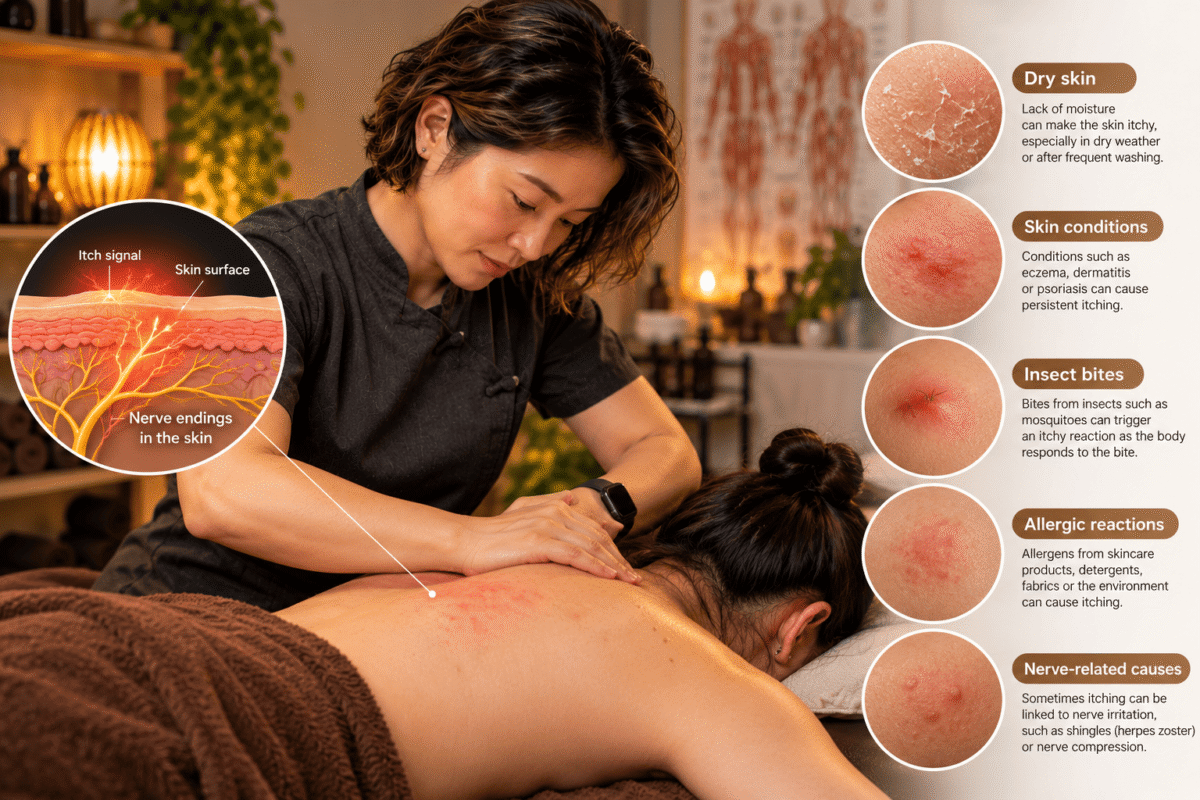
Common possibilities include dry skin, insect bites, hives, heat rash, eczema and reactions to something that touched the skin. Medicines can also cause itching. Less commonly, widespread or persistent itching may relate to an underlying health condition. The appearance and timing provide clues, but they do not establish a diagnosis on their own.
A useful example is itching after massage. The cause might be a product used on the skin, heat, friction or an unrelated issue that happened around the same time. The timing is worth recording, but it does not prove which factor was responsible.
When should you seek medical care?
See a doctor if itching is severe, keeps returning, prevents sleep, occurs without a visible rash and concerns you, or comes with fever or skin that is bleeding, weeping or has pus. Severe itching during pregnancy also needs medical advice.
If itching or a rash occurs with a swollen tongue, throat swelling or difficulty breathing, treat it as an emergency. In Australia, use an adrenaline autoinjector if available and call 000.
What are the treatment options?
Treatment depends on the cause. For dry or easily irritated skin, a clinician may suggest changes to skin care, such as shorter, less hot showers, a mild cleanser and moisturiser. If a product is suspected, identifying and avoiding the irritant may help. Other causes may require medicines or treatment directed at an underlying condition.
Avoid guessing that every itch is an allergy or repeatedly covering it with new creams and oils. If the cause is unclear or the symptom persists, a pharmacist or doctor can help you choose an appropriate next step.
Can massage help itching?
Massage is not a treatment for the underlying causes of itchy skin. Rubbing an itchy patch may increase irritation, particularly when the skin is inflamed, broken or already sensitive. Massage should not be performed over open or vulnerable skin.
If you have an itch before an appointment, tell your therapist before any product is applied. They can ask about the area, avoid contact with affected skin, reconsider oils or lotions, and postpone treatment or recommend medical assessment when appropriate. If itching begins during a session, say so immediately rather than waiting for it to pass.
From the therapist: “An itch is useful information. Tell me when it started and what touched your skin so we can decide whether treatment is appropriate today.”
Your Body Talks. Learn to Listen.
An itchy area does not need deeper pressure. It needs the right questions first and sometimes a clinician who can assess the skin and identify the cause.
Ask it. Even if you think it’s a ridiculous question.
Someone else has probably wondered exactly the same thing.
