Shooting Pain
Why Does Pain Travel?
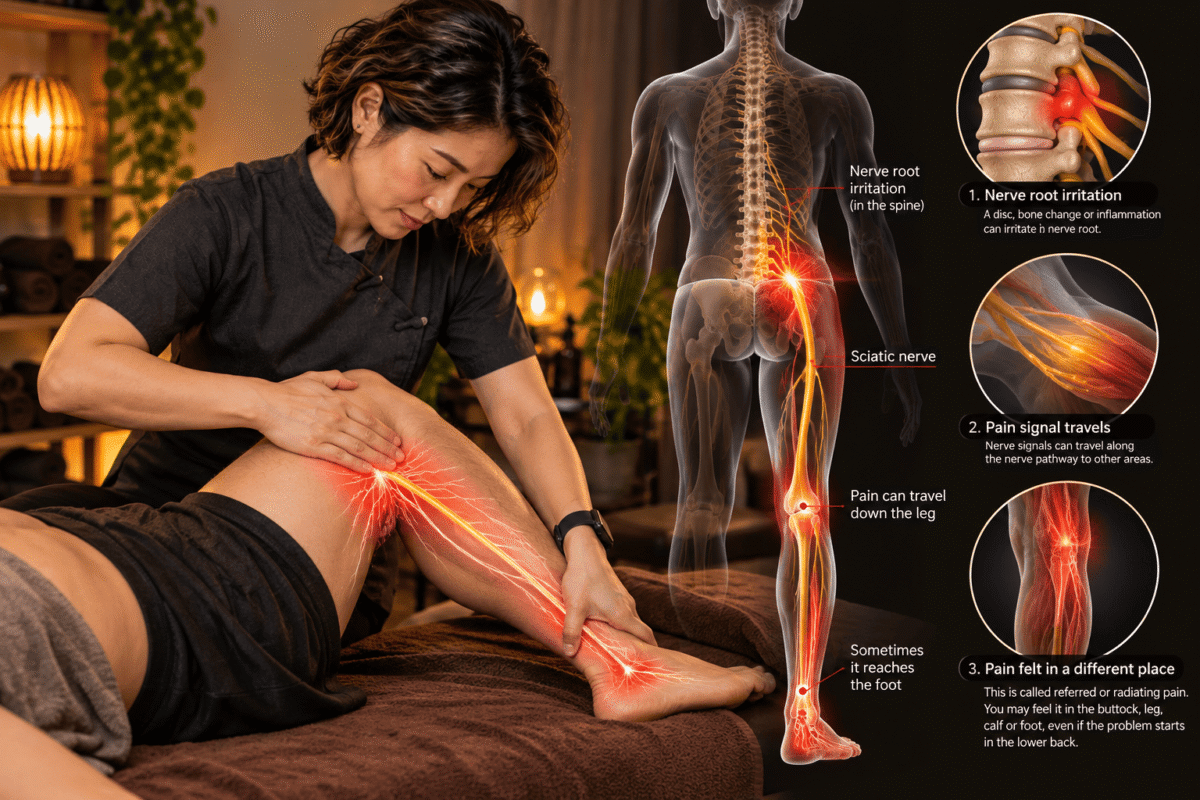
Pain that moves can be unsettling. You may feel fine in one position, then a sudden line of pain appears when you bend, walk or change position.
“It starts in my back then shoots down my leg.”
As a therapist, I want to know where the pain begins, where it travels and whether you notice numbness or weakness alongside it.
Those details help us decide what needs assessment. Shooting pain can occur with nerve problems, but the sensation alone does not prove that a nerve is trapped or that massage is the right first step.
What does shooting pain feel like?
Shooting pain often seems to travel from one place to another. Some people describe a quick jolt; others feel a sharp, electric or burning sensation along an arm, leg or part of the face. It may come and go, or return during particular movements. Nerve pain can have these qualities, sometimes alongside tingling, altered sensation or weakness.
When you describe the pain, these details are useful:
- Where does it start and end?
- Does it travel along the same path each time?
- What brings it on or eases it?
- Do you also have numbness, tingling or weakness?
- Is it changing, spreading or affecting what you can do?
The path matters. “Pain down my leg” gives a clinician more to work with than “my back is tight.”
What may cause shooting pain?
One possible cause is irritation or damage involving a nerve. For example, sciatica describes pain that starts around the back or buttock and travels down a leg. Other nerve problems can affect the hands, feet or face. However, the location and pattern need proper assessment; shooting pain is a symptom, not a diagnosis.
It is tempting to assume that a tight muscle is “pressing on a nerve.” Sometimes the surrounding muscles may also feel uncomfortable, but that explanation should not be presented as a fact without an assessment. The priority is to establish whether there are changes in strength or sensation and whether another condition needs attention.
When should you seek urgent care?
Seek urgent medical assessment if back and leg pain occurs with new difficulty passing urine, loss of bladder or bowel control, numbness around the genitals or back passage, or significant or worsening leg weakness. These can be warning signs of a serious nerve problem.
If shooting pain is new, persistent or accompanied by numbness or weakness, arrange a medical assessment even when it does not appear to be an emergency.
What are the treatment options?
Treatment depends on the underlying problem and its severity. A clinician may ask about the pain’s path, test movement, strength and sensation, and decide whether further investigation is appropriate.
For some conditions, a plan may include advice on activity, suitable movement or exercise, and pain management. Other problems require different medical care. For instance, healthdirect advises people with symptoms of sciatica to see a doctor; treatment decisions should follow assessment rather than the label “shooting pain” alone.
The practical goal is to track more than pain intensity: Is the pain travelling farther or less far? Is strength changing? Can you walk, work or sleep more comfortably? Those changes help guide the next step.
Can massage help shooting pain?
Massage may help with accompanying muscle discomfort or provide short-term relief for some people with back pain. However, evidence for massage in low-back pain is limited in quality, and relief from associated soreness does not show that a nerve problem has been resolved.
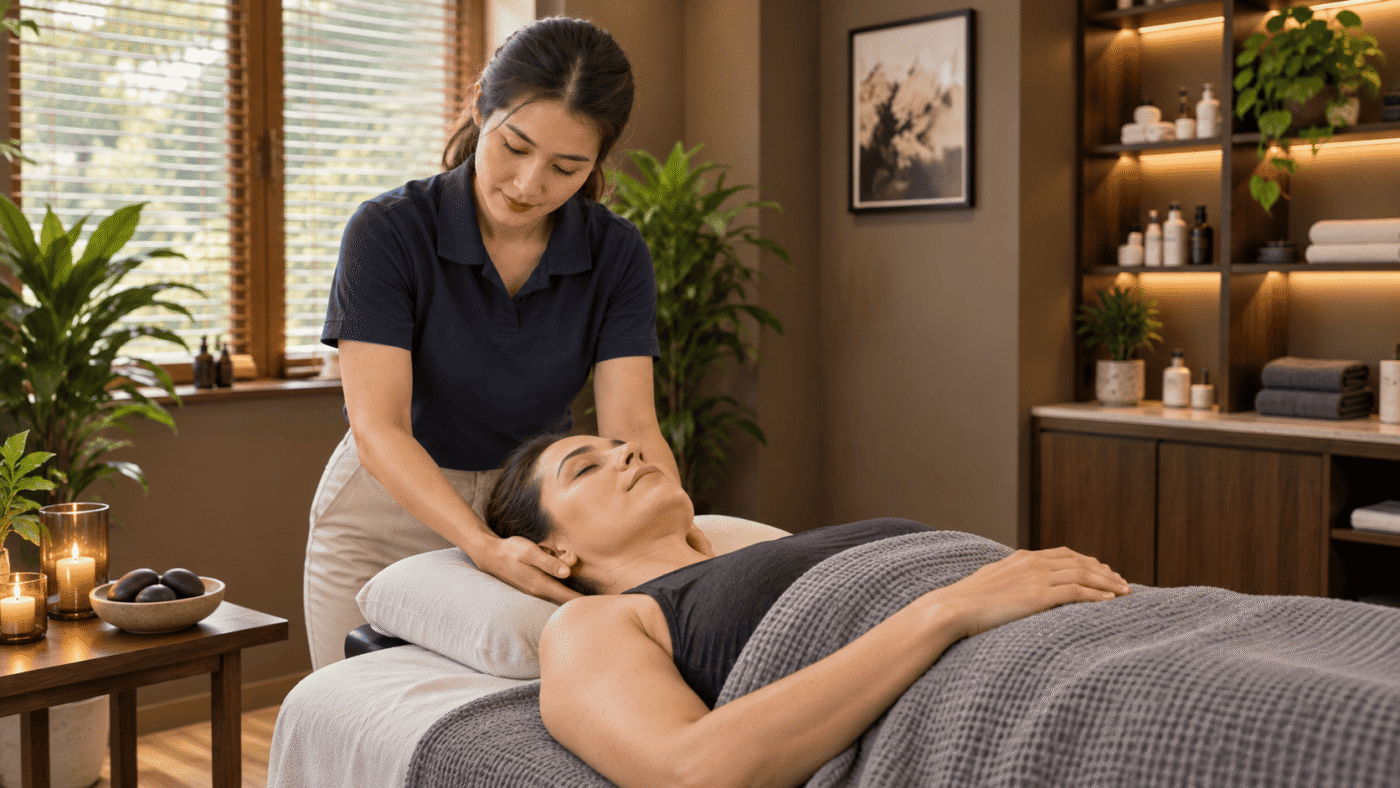
Before treatment, a massage therapist should ask about the full symptom pattern and work within their scope. Pressure should be adjusted to your response. If a technique sends pain farther down an arm or leg, produces an electric sensation, or makes symptoms worse, tell the therapist immediately so they can stop and reassess.
From the therapist: “Show me where the pain travels. That tells us more than pressing only on the place where it begins.”
Your Body Talks. Learn to Listen.
Massage can be a supportive part of care when appropriate. New weakness, changing sensation or bladder and bowel symptoms need medical assessment not a stronger massage.
Ask it. Even if you think it’s a ridiculous question.
Someone else has probably wondered exactly the same thing.
