Muscle Cramping
Why Does a Muscle Suddenly Tighten?
For a few moments, moving your leg feels almost impossible. Then the cramp eases, although the muscle may remain sore afterward.
“My calf seized up in the middle of the night.”
If you tell me you have cramping, I want to know which muscle is involved, how long the episode lasts and whether the area returns to normal between episodes. A brief muscle cramp is common. Repeated “cramping,” however, deserves a closer look especially if it comes with swelling, weakness or pain during walking.
What does cramping feel like?
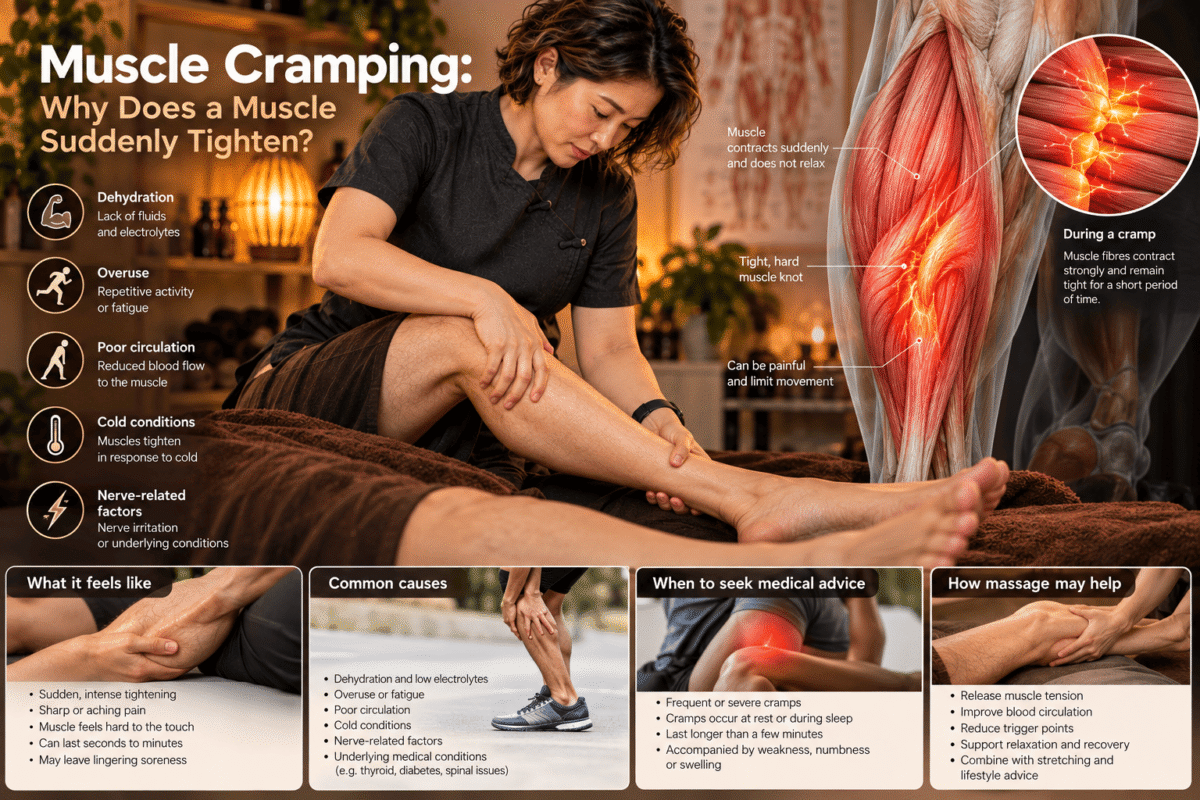
A muscle cramp is a sudden, involuntary tightening that causes pain and can make movement difficult. Leg cramps often affect the calf, though they can also occur in the foot or thigh. An episode may last seconds or several minutes, and the muscle can feel sore afterward.
The word cramping can also describe other sensations. Someone might use it for a steady ache, a pulling feeling or pain that appears during exercise. That is why the pattern matters:
- Does the muscle visibly or noticeably tighten?
- How long does each episode last?
- Does it happen during activity, afterward or at night?
- Is it always in the same place?
- Are there other symptoms, such as swelling or numbness?
These details help distinguish a typical cramp from another problem that needs assessment.
What may cause cramping?
Muscle cramps can occur after strenuous or unfamiliar exercise. Dehydration may contribute in some circumstances. Pregnancy, certain medicines and other health conditions can also be associated with leg cramps. Sometimes no clear cause is found.
It is too simplistic to say, “A cramp means you need magnesium.” Low levels of some minerals can matter in particular cases, but a person’s cramp cannot be diagnosed as a deficiency from the symptom alone. Evidence that magnesium supplements prevent ordinary cramps is also inconclusive.
When is it more than a routine cramp?
Speak with a doctor if cramps repeatedly disturb your sleep, last longer than usual, or occur alongside numbness or leg swelling.
A painful calf with new swelling, redness or discolouration needs prompt medical assessment. A blood clot in a deep leg vein can cause calf pain and swelling; it should not be treated as a simple cramp or massaged. If chest pain or difficulty breathing develops, call 000 in Australia.
What are the treatment options?
For a straightforward muscle cramp, gentle stretching or movement may help while it happens. The cramp will often settle on its own. If it keeps returning, a doctor can review the pattern, your health and any medicines before recommending treatment.
Prevention depends on what is contributing to the cramps. For someone who recently increased exercise, reviewing training load may be useful. If there is concern about hydration, medicines or another health condition, the response should address that factor. Taking a supplement without knowing the cause may miss the real issue.
Can massage help cramping?
Gentle massage may feel helpful during an ordinary muscle cramp, and it can be considered once the cramp has eased if the area is simply sore. Pressure should stay comfortable; a muscle that has just cramped does not need to be forced to “release.” Healthdirect includes gentle massage as one possible measure for a simple calf cramp.
The assessment changes if there was a sudden injury, bruising or swelling. Massage is not appropriate over a suspected acute calf strain in its early stage, and a red, swollen, painful calf must be assessed for a possible clot before any massage.
From the therapist: “Tell me what happens between cramps. If the muscle settles completely, we may approach it differently from a calf that stays swollen, painful or weak.”
Your Body Talks. Learn to Listen.
A brief cramp may respond to gentle movement and time. Frequent cramps, unusual symptoms or a swollen painful leg need an assessment of the cause not simply stronger massage.
Ask it. Even if you think it’s a ridiculous question.
Someone else has probably wondered exactly the same thing.
