
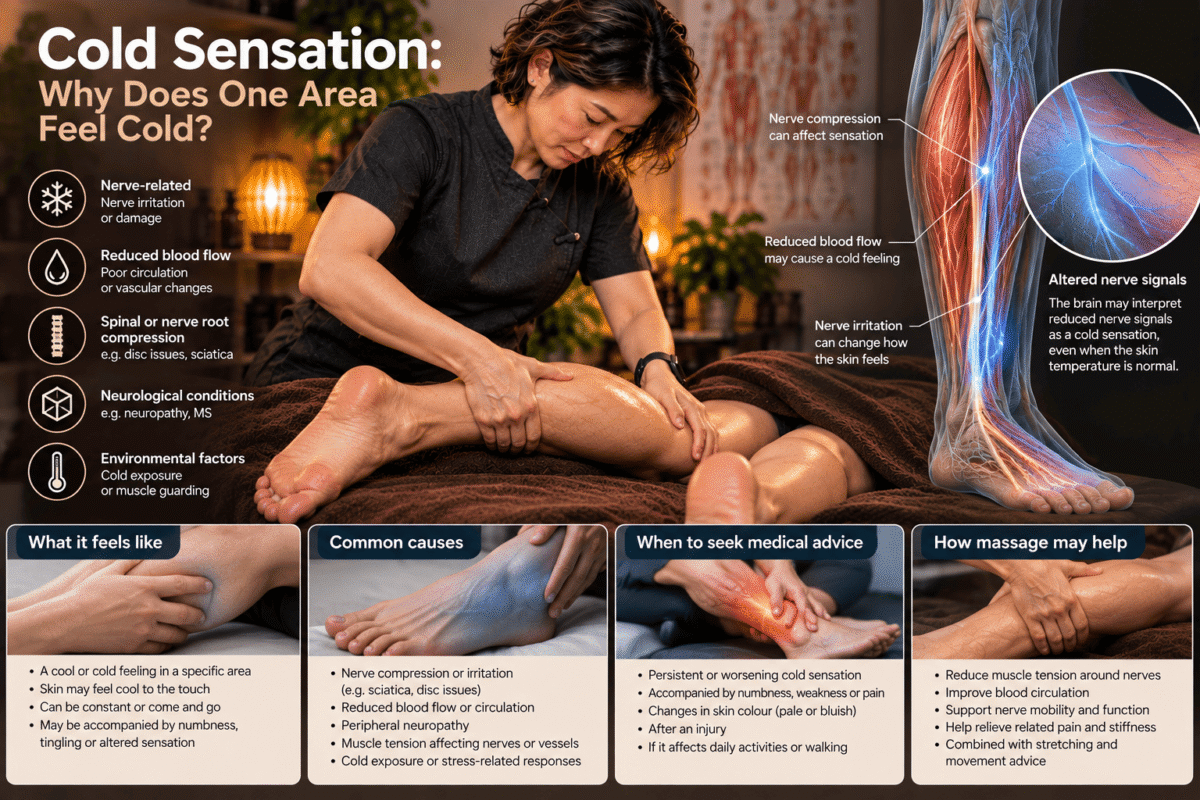
Cold Sensation
Why Does One Area Feel Cold?
That detail matters. Feeling cold and being cold to the touch are different observations. One may point toward a change in how sensation is perceived; the other may raise questions about temperature or blood flow. Neither can be diagnosed from a massage appointment alone.
“My foot feels cold, but when I touch it, it doesn’t seem cold at all.”
As a therapist, I would ask whether the feeling started suddenly, whether it affects one side or both, and whether there is numbness, pain or a change in skin colour. Those answers help determine whether massage is suitable or whether medical assessment should come first.
What does a cold sensation feel like?
Some people describe a cold patch, icy toes or a chilling feeling that seems to come from inside an arm or leg. Others notice that the skin really is colder than the surrounding area. The sensation may come and go, appear during exposure to cold, or remain present indoors.
Try to notice:
- Does the area feel cold to another person’s touch, or only to you?
- Is it on one side or both sides?
- Has the skin become pale, blue, red or otherwise changed colour?
- Is there pain, tingling, numbness or weakness?
- Did it begin suddenly or develop over time?
This distinction is useful because peripheral nerve conditions can alter sensation, while problems affecting blood flow may cause an area to become physically cold.
What may cause a cold sensation?
Ordinary exposure to a cool environment can make hands and feet feel cold. In some people, cold or stress triggers episodes in which the fingers or toes change colour and feel numb or painful, as can happen with Raynaud’s.
Other possibilities need assessment. Peripheral neuropathy can cause unusual sensations, often beginning in the fingers or toes. Peripheral vascular disease may cause coldness in the lower legs or feet, sometimes with leg pain or wounds that do not heal. These are examples, not diagnoses to make from the word cold alone.
When should you seek urgent help?
If an arm or leg suddenly becomes pale, numb or cold to the touch particularly after an injury call 000 in Australia. A sudden change in a limb’s temperature and colour should not be treated with massage while waiting to see whether it passes.
Arrange a medical assessment for a cold sensation that persists, keeps returning, affects one side, or comes with pain, numbness, weakness, colour changes or a wound that is slow to heal.
What are the treatment options?
Treatment depends on why the area feels cold. A clinician may ask about the symptom pattern, examine the skin and sensation, and assess circulation when indicated. The next steps differ for a response to cold weather, a nerve condition and a blood flow problem.
For example, managing Raynaud’s may involve reducing exposure to cold and addressing triggers. A vascular condition, however, may require medical treatment directed at blood flow and its underlying risks. Persistent altered sensation also needs attention to its possible cause.
Do not assume that heating the area or “improving circulation” with pressure is the solution. If sensation is reduced, you may also have difficulty judging whether a hot pack is too hot.
Can massage help a cold sensation?
Massage may feel comforting for some people, but it does not establish or treat the cause of an unexplained cold sensation. There is no sound basis for promising that massage will restore blood flow to a limb or repair a nerve.
Before treatment, a therapist should ask whether the skin is actually cold, whether the symptom is new and whether sensation has changed. If a limb is suddenly cold, pale or painful, treatment should stop and urgent medical assessment should take priority. If a clinician has already assessed a longstanding condition, massage may be considered for comfort where appropriate, using pressure and temperature that the client can safely monitor.
From the therapist: “Tell me whether the area feels cold or is cold to touch. That difference changes what we need to check before treatment.”
Your Body Talks. Learn to Listen.
Cold sensation is a clue, not a diagnosis. A sudden cold, pale or numb limb needs urgent care; an ongoing or recurring sensation deserves assessment before anyone tries to treat it with pressure.

Ask it. Even if you think it’s a ridiculous question.
Someone else has probably wondered exactly the same thing.
