
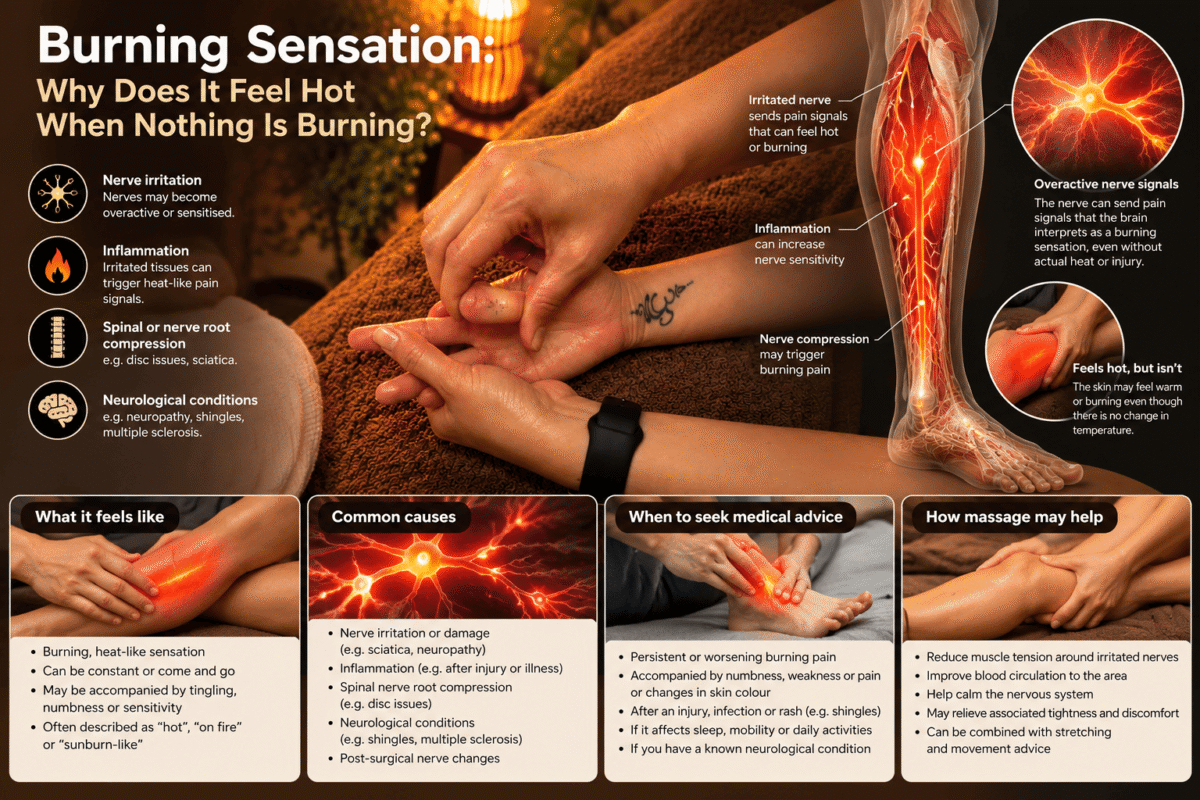
Burning Sensation
Why Does It Feel Hot When Nothing Is Burning?
That description is worth taking seriously. A burning sensation may come from irritated skin or a change in how a nerve carries sensation. In other cases, the skin is visibly red, swollen or warm to the touch.
“It feels like my skin is on fire but it looks normal.”
Before considering massage, I would want to know whether the area only feels hot or is actually hot, when the symptom started, and whether you have a rash, numbness or weakness. Those details change what should happen next.
What does a burning sensation feel like?
People describe burning as heat, stinging or a painful “on fire” feeling. It may affect a small patch of skin, spread along an arm or leg, or occur in both feet. Some people also notice tingling, numbness or sensitivity to light touch.
The skin does not have to feel warm for the sensation to be real. Peripheral nerve disorders can cause burning feelings as well as pain, numbness or weakness. However, burning by itself does not establish a nerve diagnosis.
When describing the symptom, try to note:
- Is the skin red, swollen, blistered or unchanged?
- Is the area warm to touch, or does it only feel hot to you?
- Is the sensation in one patch, along a path or on both sides?
- Did it begin after an injury, new product, heat exposure or illness?
- Are numbness, weakness or fever present?
What may cause a burning sensation?
Possible causes include skin irritation, an actual burn, infection or a nerve-related condition. For example, shingles can begin with burning or tingling in an area of skin before a rash appears. Cellulitis may make skin painful, swollen, red and warmer than the surrounding area, sometimes with fever or chills. Peripheral nerve disorders can also produce burning without a visible skin change.
The timing and appearance matter more than trying to label the sensation immediately. A new hot pack followed by a visible skin injury needs a different response from burning feet that have developed gradually over months.
When should you seek medical care?
Arrange a medical assessment if burning is new and unexplained, persists, spreads, or occurs with numbness or weakness. Seek prompt advice for red, hot, swollen and painful skin, particularly if you also feel unwell or have a fever. A new burning patch followed by a blistering rash should also be assessed for possible shingles.
If the skin has been physically burned, begin appropriate first aid: place the affected area under cool running water for at least 20 minutes. Do not massage the burn.
What are the treatment options?
Treatment depends on the cause. A clinician may examine the skin, ask about other symptoms and assess sensation when needed. Skin irritation may require avoiding a trigger; infection, shingles and nerve conditions each need their own assessment and management. Treating every burning sensation as “tight muscle” risks missing the actual problem.
While waiting for advice, pay attention to changes in the size, colour and temperature of the area and whether new symptoms appear. If a product, heat treatment or massage technique brings on burning, stop using it and tell the relevant clinician.
Can massage help a burning sensation?
Massage should not be used to treat an unexplained burning sensation directly. Pressure and friction may further irritate sensitive skin. Avoid massage over a burn, an open or blistering rash, or an area that appears infected. Deep pressure is also a poor way to investigate a possible nerve symptom. Massage carries some risk of harm, especially when vigorous techniques are used in an unsuitable situation.
If a medical professional has assessed the cause and massage is appropriate for a separate muscle complaint, the therapist can adapt the session around the affected area. Tell them immediately if touch, pressure or heat makes the burning worse.
From the therapist: “Before I touch the area, I need to know whether your skin is actually hot or whether you feel heat beneath normal-looking skin. Those are different clues.”
Your Body Talks. Learn to Listen.
Burning is a description, not a diagnosis. The safest first step is to check for visible skin changes and other symptoms, then choose care based on the likely cause.

Ask it. Even if you think it’s a ridiculous question.
Someone else has probably wondered exactly the same thing.
