Headache and Neck Pain
Is My Tight Neck Causing the Headache?
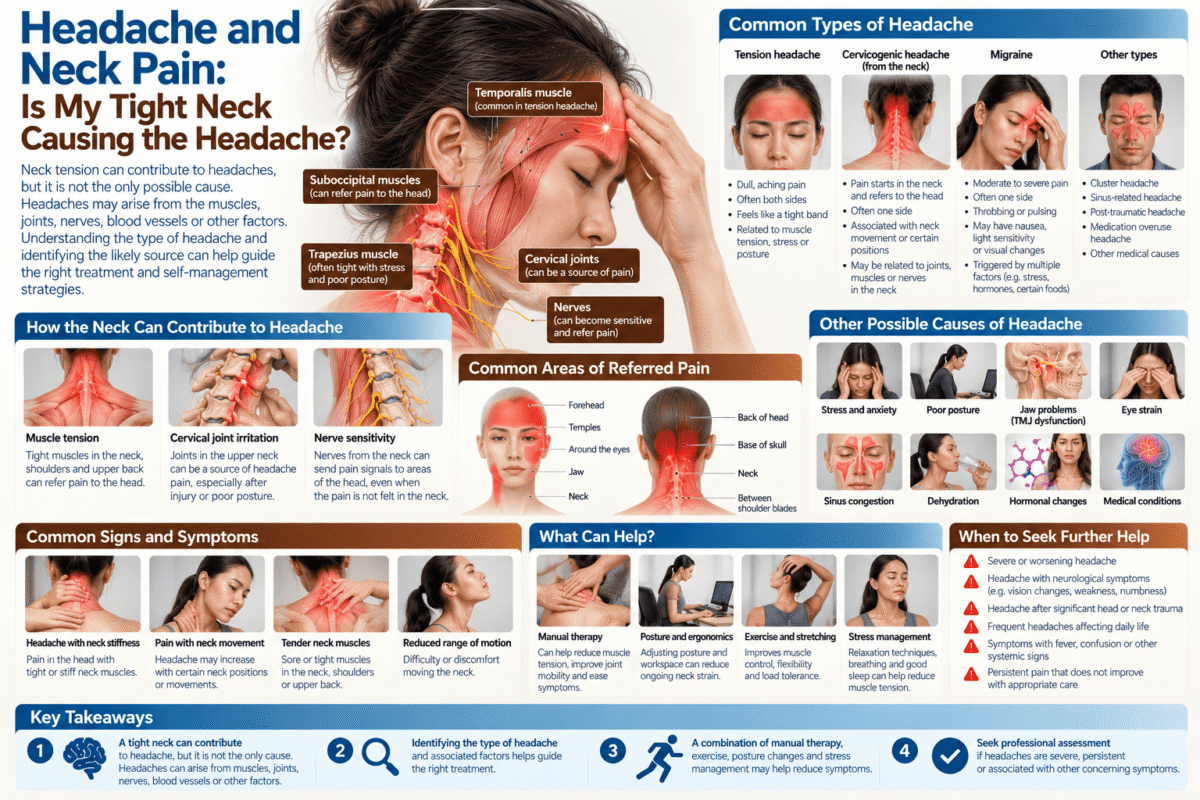
It seems reasonable to blame the neck. Perhaps a massage has helped before, too. But a tight neck and a headache occurring together do not prove that one caused the other.
“Your neck feels tight after a long day. Then your head begins to ache.”
Before choosing treatment, notice what the headache feels like, what comes with it and whether this episode differs from your usual pattern.
What does this headache feel like?
Try to describe the experience before naming it:
- Where is the pain? Across the forehead, around the head, at the back, or mainly on one side?
- What is it like? Pressure, a steady ache, throbbing or sudden sharp pain?
- What comes with it? Nausea, sensitivity to light or sound, changes in vision, or neck pain?
- What has changed? Is it more frequent, more severe, or different from headaches you have had before?
These details help a clinician assess the headache. For example, migraine can involve nausea and sensitivity to light, while tension type headache often has a different pattern. Neither can be confirmed from one symptom in a checklist.
Can a headache come from the neck?
Sometimes. A clinician may consider a neck related headache when the history and examination show a convincing link, such as a headache consistently brought on by certain neck movements. Neck tenderness alone does not establish the cause. Formal diagnostic criteria require more than finding a sore muscle.
This is why a useful assessment asks about both the headache and your neck. It may also explore sleep, recent illness, medication use and whether the headache interrupts daily activities.
What should you do if headaches keep returning?
Record a few episodes: when they started, how long they lasted, associated symptoms, what you were doing, and what helped. Bring those notes to a doctor or other appropriate clinician if headaches are recurring, worsening or affecting your life. The pattern may guide treatment more reliably than trying to remember your “average” headache during an appointment.
Care depends on the type of headache and your medical history. A clinician may discuss suitable medication, ways to manage episodes, or a plan to reduce their frequency. A headache that is new or different deserves assessment before assuming the same treatment that helped previously will help again.
Can massage help?
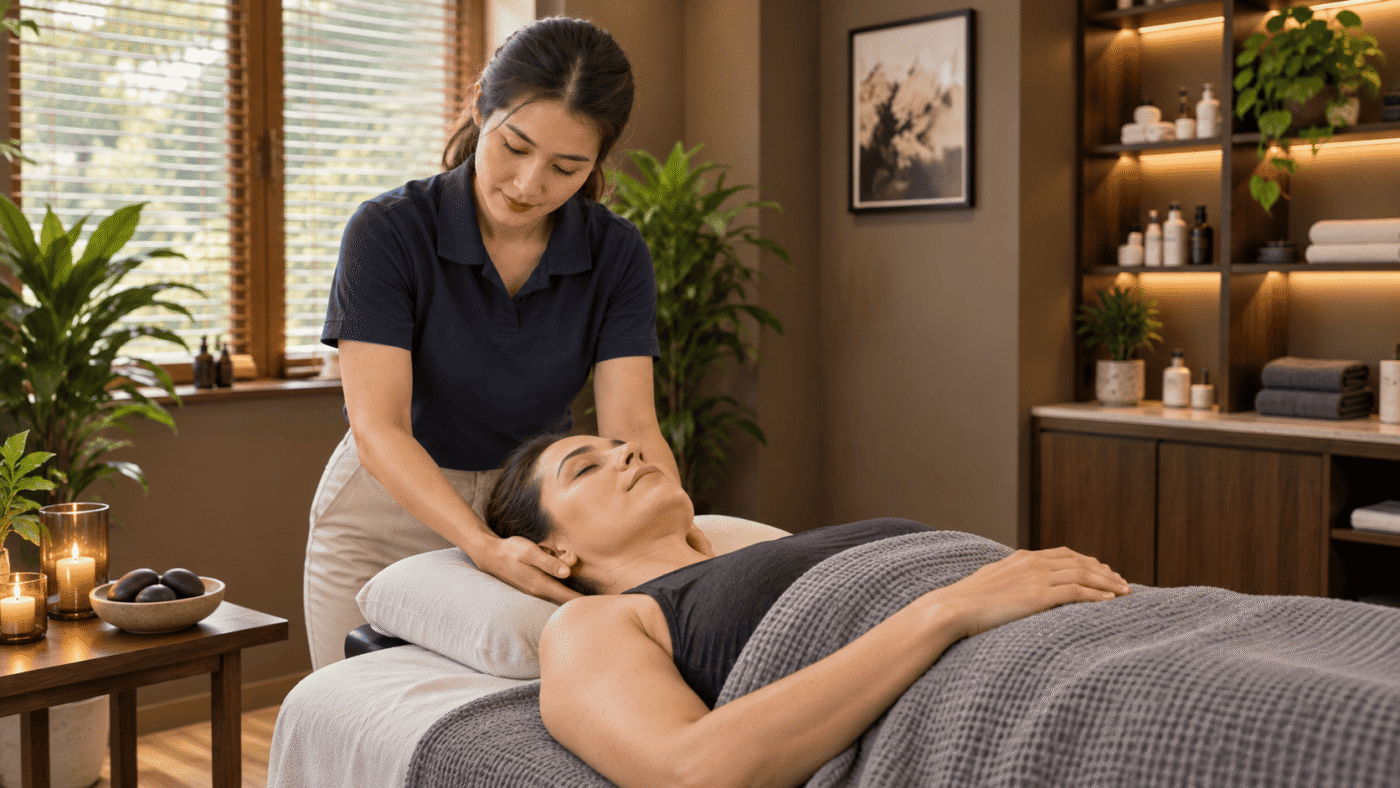
Massage may help some people feel more comfortable when head pain occurs alongside neck or shoulder discomfort. However, studies of massage for headaches are few, and the results are not consistent. Feeling better after massage does not prove that muscle tension caused the headache.
Tell your therapist what your usual headache is like and whether this one is different. A severe, unfamiliar headache calls for medical assessment, not deeper pressure around the neck or head.
When should you seek urgent help?
Call your local emergency number for a headache that becomes extremely painful suddenly, or one accompanied by new weakness, facial drooping, difficulty speaking or confusion. A severe headache after a head injury also needs urgent assessment.
Seek prompt medical advice for a new headache with jaw pain while chewing, a tender scalp or changes in vision. These symptoms should not be dismissed as routine neck tension.
From a therapist: “Tell me how today’s headache compares with your usual one. The difference may matter more than where your neck feels tight.”
Your Body Talks. Learn to Listen.
A headache is a pattern of symptoms, not simply a sore spot on the head. Observe what accompanies it and what has changed. Massage may offer comfort in some cases, while an unfamiliar or concerning pattern needs medical assessment.
Ask it. Even if you think it’s a ridiculous question.
Someone else has probably wondered exactly the same thing.
