“I need to recover.”
Okay.
But recover from what?
A hard workout?
A long week at work?
An injury?
Poor sleep?
A physically demanding job?
Or three days of gardening because apparently the entire backyard needed to be fixed in one weekend?
Rest can certainly be part of recovery. But recovery doesn’t simply mean: Stop everything and wait.
We use the word recovery constantly.
Massage for recovery.
Sleep for recovery.
Sauna for recovery.
Stretching for recovery.
Rest day for recovery.
But what does recovery actually mean?
A useful way to think about recovery is:
Recovery is the process of restoring readiness and adapting after physical or mental demands. Your body experiences a challenge. Then it responds.
Depending on the situation, recovery may involve restoring energy, repairing tissues, adapting to training, managing fatigue and gradually rebuilding the capacity to perform again.
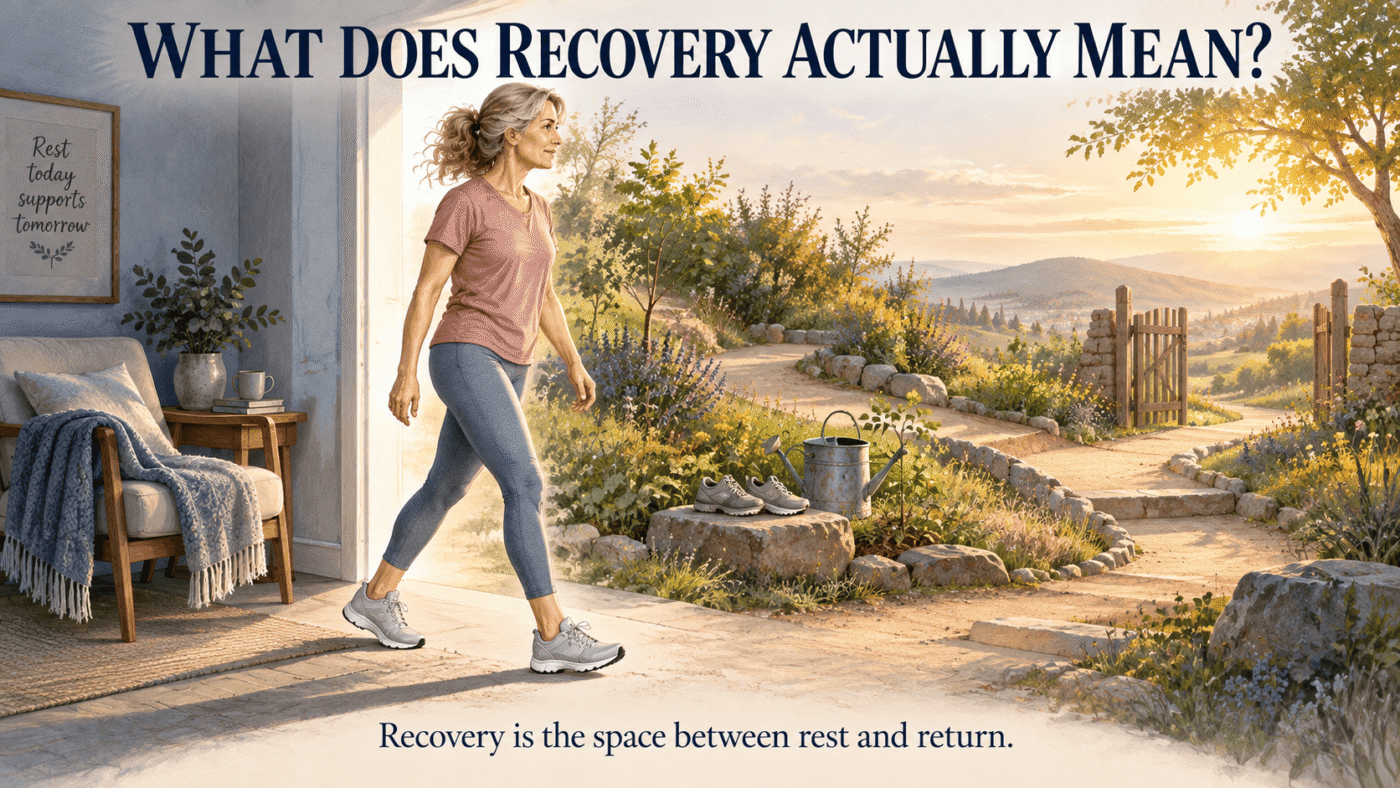
So recovery isn’t necessarily the opposite of activity. Sometimes appropriate activity is part of recovery.
Imagine your body has a certain capacity today. Then life places demands on it. Work. Training. Walking. Lifting. Sport. Stress. Poor sleep. An unfamiliar activity. Usually, the body can manage plenty of demand. But when demand becomes greater than what you’re currently prepared for, you may notice: Fatigue, Soreness, Reduced performance, Stiffness, Discomfort.
Or simply: “I don’t feel ready to do that again today.” That doesn’t automatically mean you’ve damaged something. Sometimes you’ve simply challenged your current capacity. This gives us an important relationship:
Demand → Recovery → Adaptation → Capacity
Challenge the body. Allow appropriate recovery. The body adapts. Then, over time, it may become better prepared for similar demands.
This distinction matters. You can be sore while recovering. You can recover without becoming sore. And being extremely sore doesn’t mean you’ve had an exceptionally productive workout or treatment. Soreness is not a score.
The same applies after massage. Some temporary tenderness may occur after certain treatments, but creating soreness isn’t the objective. We shouldn’t measure the quality of exercise or treatment by how difficult it is to walk downstairs the following morning.
After some injuries, illnesses or medical procedures, rest may be important. But for many everyday musculoskeletal situations, recovery can also involve appropriate movement.
Walking.
Gentle mobility.
Gradually returning to activity.
Appropriate strengthening.
Adjusting workload.
Changing how much you do rather than stopping everything. The key word is appropriate. If your usual activity exceeds your current capacity, perhaps we reduce the demand temporarily and rebuild.
That’s different from deciding: “Something hurts, therefore I must not move.” Pain and damage aren’t always the same thing.
You can have the world’s most sophisticated recovery routine…but if you’re consistently sleeping poorly, something important is missing. Sleep supports many processes involved in physical and mental recovery. And recovery isn’t influenced by only one factor. It can also be affected by:
- nutrition and hydration
- physical workload
- training volume
- illness
- psychological stress
- general activity
- recovery time between demanding activities
This is why buying another recovery gadget isn’t always the first thing your body needs. Sometimes the exciting new recovery technology is called: going to bed. Not particularly glamorous. Still useful.
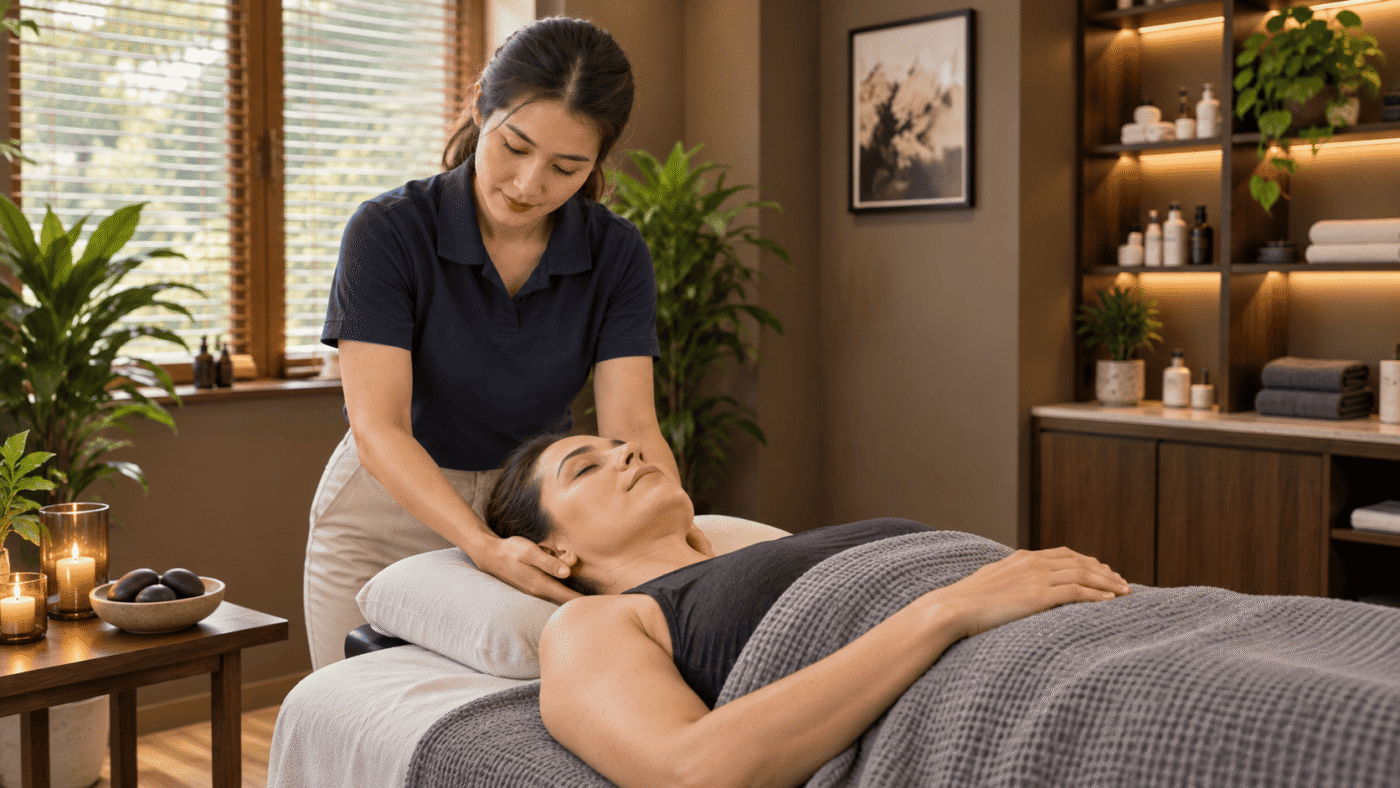
Massage may be one part of a recovery strategy. Some people find massage helps reduce soreness, discomfort or feelings of muscle tension. It may help them relax or make movement feel easier. Those can be worthwhile outcomes. But massage doesn’t replace: Sleep, Nutrition, Appropriate physical activity, Progressive strengthening, Workload management, Or time.
And we should be cautious with claims that massage “flushes toxins” or magically accelerates every stage of tissue healing. The body already has sophisticated systems managing circulation, metabolism, waste products and tissue repair.
Massage may support how someone feels and moves during recovery. It doesn’t perform recovery on behalf of the body.
*********
Recovery Tools Are Tools Not Recovery Itself
Massage. Stretching. Compression. Sauna. Cold exposure. Mobility work. Foam rolling. They may all have roles depending on the person, goal and context.
But sometimes people become so focused on recovery tools that recovery itself becomes another workout. Monday: Training, Then stretching, Foam rolling, Massage gun, Compression, Sauna, Mobility routine. Followed by checking twelve recovery metrics on a watch.
At some point, your recovery routine may need recovery. The question isn’t: “How many recovery techniques can I use?” It’s: “What does my body actually need right now?”
Don’t judge recovery only by whether soreness has completely disappeared. Look at function. How do you feel when you return to normal activity? Can you perform what you need to do? Has movement returned toward normal? Is your usual workload becoming manageable again? Is performance recovering?
Are symptoms improving rather than progressively worsening?
Can you tolerate gradually increasing activity?
These questions give recovery context. For example, after treatment we might observe: How does the body respond today? Then: How does it respond tomorrow? And later: What happens when normal activity returns? Immediate improvement is useful information. But sometimes the response over time tells us more.
There isn’t one recovery schedule that applies to everyone. Recovery depends on what happened in the first place. A hard training session is different from an injury. An injury is different from surgery. A stressful working week is different from returning to sport after months away. Age, health, sleep, workload, training history and many other factors can influence the process.
So statements such as: “You should always recover within 48 hours.” or: “Everyone needs exactly two weeks.” are usually too simplistic.
Sometimes a therapist may deliberately leave more time between treatments to observe what changes, what settles and what remains. That observation period can be clinically useful.
But it isn’t a magic recovery number. Recovery should respond to the person not the calendar alone.
Some discomfort or fatigue can be expected after physical demands. But symptoms that are severe, unusual, progressively worsening or simply not behaving as expected deserve attention.
The answer shouldn’t always be: “I just need more recovery.” Sometimes we need to reconsider what is happening. Perhaps workload needs changing. Perhaps the rehabilitation plan needs adjusting. Perhaps treatment needs reassessment. Or perhaps another healthcare professional needs to be involved. Knowing when recovery isn’t following the expected pattern is part of recovery too.
Ultimately, recovery isn’t about becoming perfectly rested. It’s about becoming sufficiently ready for the next appropriate demand. Work. Training. Walking. Sport. Daily life. Or whatever matters to you.
That’s why recovery and movement aren’t opposites. They work together. A simple way to think about it is:
Demand → Recover → Adapt → Build Capacity
Then repeat. Not endlessly. Not perfectly. And certainly not by trying every recovery trend on the internet before breakfast. The goal isn’t to spend your life recovering. The goal is to recover well enough to keep living it. So instead of asking: “What’s the best recovery technique?” try asking: “What am I recovering from — and what do I need to be ready for next?”
That question gives recovery a purpose.
Your Body Talks. Learn to Listen.
And if your “recovery day” contains more activities than your training day…we may need to have another conversation about the meaning of rest.
Ask it. Even if you think it’s a ridiculous question.
Someone else has probably wondered exactly the same thing.
