“I haven’t exercised for months.”
Then one Saturday morning you decide:
Today is the day.
You clean the house.
Mow the lawn.
Go for a long walk.
Maybe even return to the gym.
And the next morning your body responds:
“Excuse me. What exactly happened yesterday?”
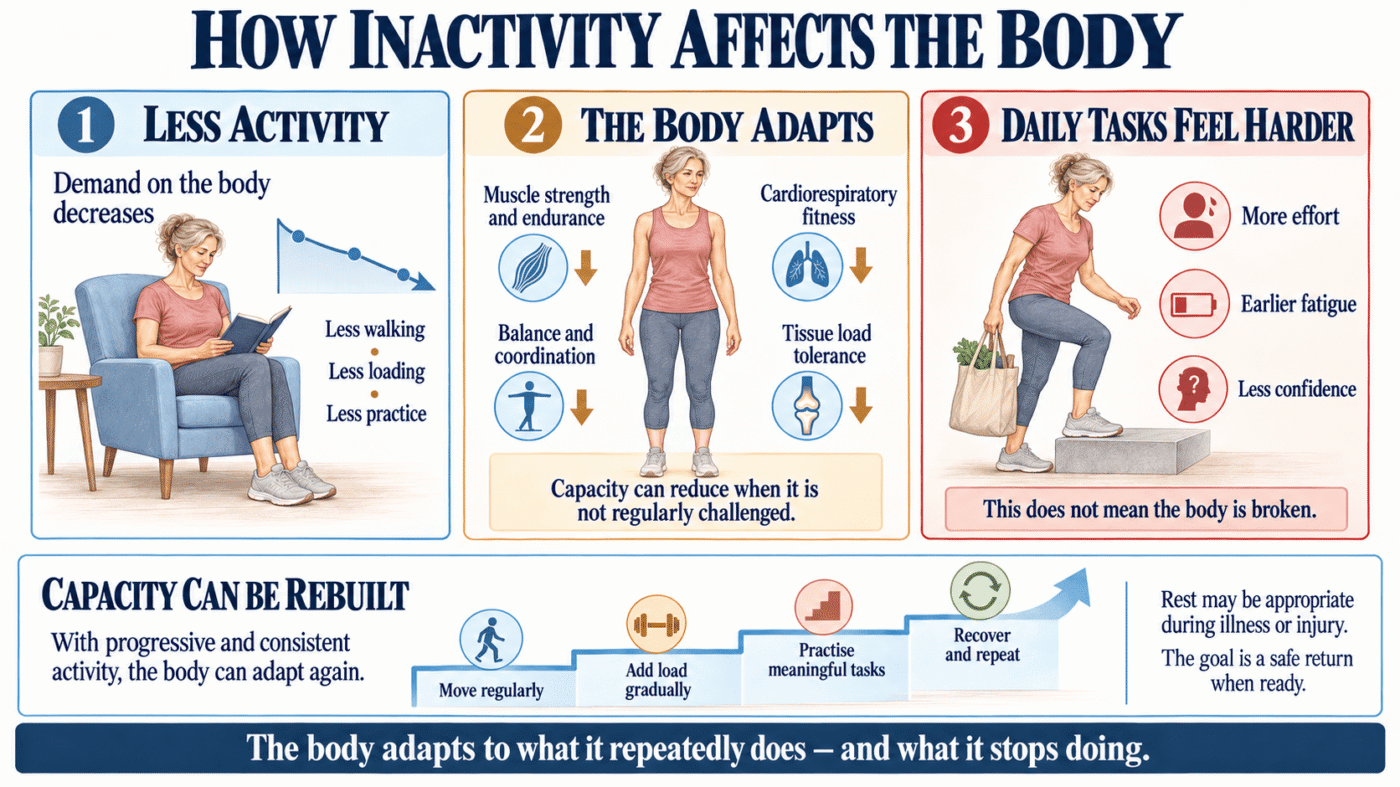
When we regularly use our muscles, joints and cardiovascular system, the body adapts to those demands. When those demands become much lower, the body adapts to that too.
The human body is remarkably adaptable. That’s good news. But adaptation works in both directions.
Where Does Massage Fit?
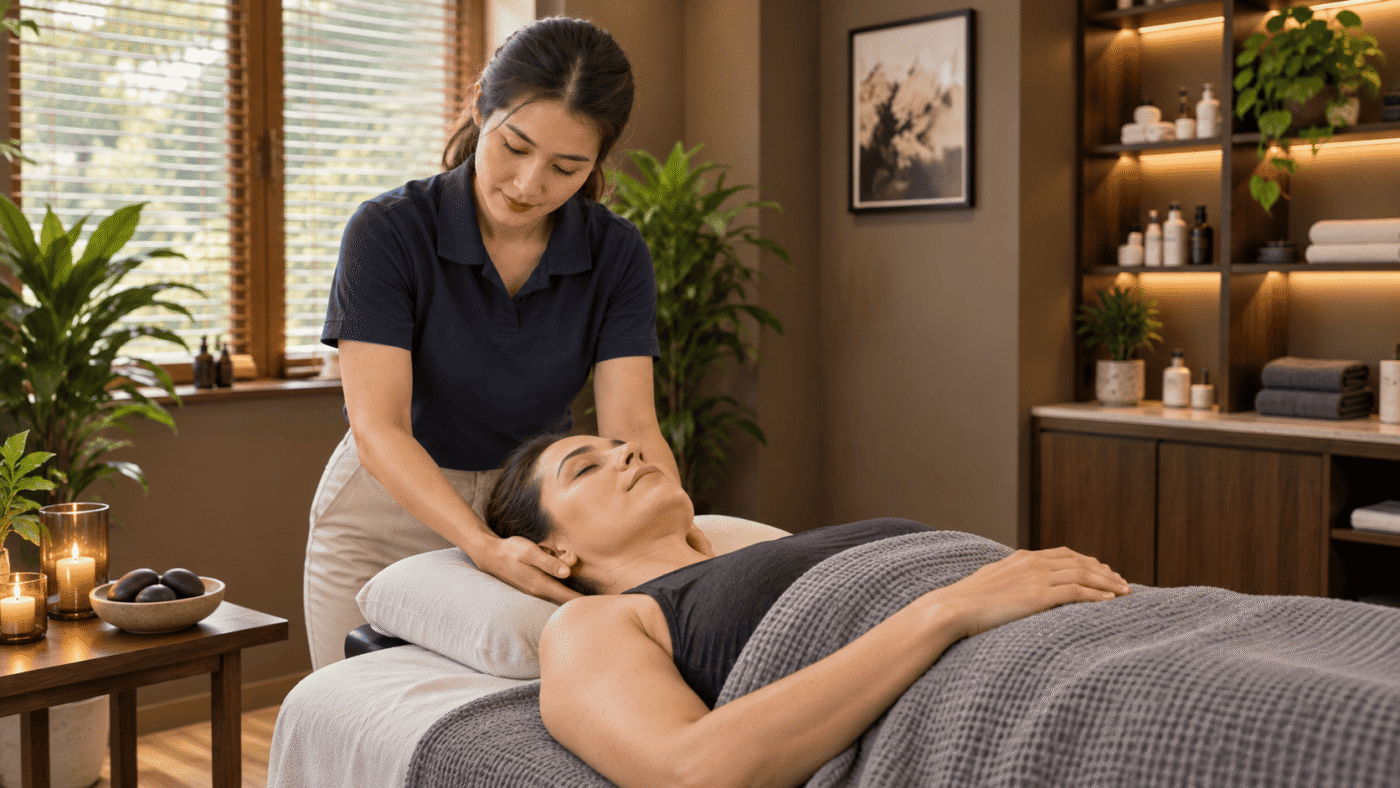
Massage may help some people feel more comfortable moving again. It may reduce soreness or feelings of tension and create a useful opportunity for movement.
But massage cannot replace physical activity. We can’t massage someone into cardiovascular fitness. We can’t manually create all the strength needed for daily life. And repeatedly loosening an area doesn’t necessarily build its capacity.
Manual therapy may help open the door.
Eventually, the body still needs to walk through it. That may mean movement, exercise, strength, gradual exposure to activity or simply using the body more regularly.
Inactivity doesn’t simply mean: “You don’t go to the gym.” Someone can exercise occasionally but still spend much of the day sitting. Another person may never enter a gym but walk, lift, garden and move regularly throughout the day.
So it’s useful to think beyond exercise alone. The bigger question is: How much movement and physical demand does your body regularly experience?
Work.
Walking.
Stairs.
Housework.
Sport.
Exercise.
Lifting.
Playing with the kids.
Getting up and down from the floor.
They all count.
Think of physical capacity as something the body maintains partly in response to demand. If you regularly walk several kilometres, your body becomes accustomed to walking several kilometres.
If you regularly lift appropriate loads, your muscles adapt to producing force. If you regularly move through different ranges, those movements remain familiar. But when activity decreases for a prolonged period, some of that capacity can gradually decline. This process is often called deconditioning.
It may involve changes in:
- muscle strength
- muscular endurance
- cardiovascular fitness
- tolerance to physical workload
- balance and coordination
- confidence with movement
This doesn’t mean your body is damaged. It means your body has adapted to a different level of demand. And importantly, adaptation can change again.
Muscles respond to the work we give them. When they aren’t challenged sufficiently over time, strength and muscle capacity can decline.
This becomes particularly noticeable after longer periods of inactivity, illness, injury or immobilisation. Then ordinary activities may suddenly feel harder.
Stairs feel steeper. Shopping bags seem heavier. A walk feels longer. Getting out of a low chair requires more effort. The stairs haven’t secretly increased their difficulty setting.
Your current capacity may simply be different.
People who have been inactive sometimes say: “I’ve become really stiff.” That experience can be real. But again, we shouldn’t automatically conclude: “My muscles have become permanently shortened.”
Movement can feel different after periods of reduced activity. Available range, strength, coordination, confidence and tolerance to certain positions can all contribute to how mobile someone feels. And this is why stretching alone may not solve the problem.
If you haven’t been using a movement regularly, you may need to gradually practise and load that movement again. Mobility isn’t only about creating range. It’s about being able to use it.
This deserves clarification. Sitting isn’t inherently dangerous. Your body isn’t being damaged every time you sit at a desk.
The issue is more about the overall pattern. If most of your day involves very little movement, your body receives fewer opportunities to change position, produce force and experience different physical demands.
Instead of obsessing over finding the one perfect sitting posture, a more useful strategy may be: Change positions. Move regularly. Give your body options.
Your next posture is often more interesting than your perfect posture.
Start With What You Can Do Now
Find something you can realistically continue doing. Because the best movement plan isn’t necessarily the most sophisticated one. It’s the one that actually becomes part of your life.
Your Body Is Adaptable
Inactivity can reduce physical capacity. But that doesn’t mean the body has permanently deteriorated. The same ability to adapt that allowed capacity to decrease can also help rebuild it.
Move → Challenge → Recover → Adapt
Then gradually challenge again. You don’t need to become an athlete. You don’t need perfect mobility. And you don’t need to spend your entire life exercising.
You simply need enough physical capacity for the things you want and need your body to do. So if you’ve been inactive for a while, don’t ask: “How do I get my old body back immediately?” Ask: “What can I start doing consistently from where I am now?”
That’s usually a much better beginning.
Your Body Talks. Learn to Listen.
And if your first workout in six months makes sitting on the toilet feel like an advanced squat assessment…perhaps next time we’ll progress a little more gradually.
Ask it. Even if you think it’s a ridiculous question.
Someone else has probably wondered exactly the same thing.
