Pain & Conditions

Understanding Pain

Pain is an important protective experience, but it is not a direct measurement of tissue damage.

It can be influenced by injury, inflammation, nerve function, physical loading, previous experiences and many other biological and contextual factors. This is why two people with apparently similar conditions may experience very different symptoms.

Pain, Symptoms & Conditions

The location of pain does not always identify its source. Symptoms may arise locally, be referred from another structure or involve the nervous system.

Similarly, a diagnosed condition does not tell us everything about a person’s function. Understanding symptoms, contributing factors and functional limitations is therefore more useful than focusing on a diagnostic label alone.

Persistent, severe or unusual symptoms may also require assessment by an appropriate healthcare professional rather than massage treatment alone.

What You Need to Understand

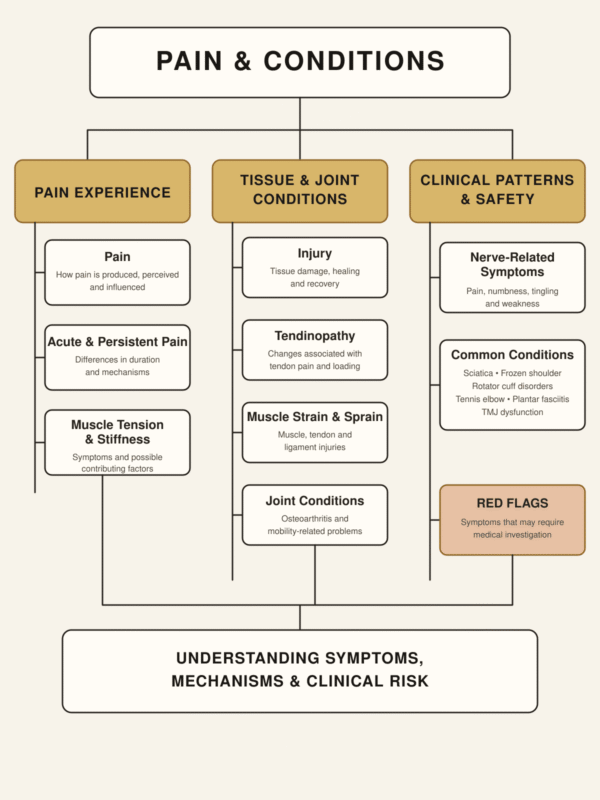
Pain — how pain is produced, perceived and influenced
Acute & Persistent Pain — differences in duration and mechanisms
Muscle Tension & Stiffness — common symptoms and possible contributing factors
Injury — tissue damage, healing and recovery
Tendinopathy — changes associated with tendon pain and loading
Muscle Strain & Sprain — injuries involving muscles, tendons and ligaments
Joint Conditions — including osteoarthritis and mobility-related problems
Nerve-Related Symptoms — pain, numbness, tingling and weakness
Common Conditions — including sciatica, frozen shoulder, rotator cuff disorders, tennis elbow, plantar fasciitis and TMJ dysfunction
Red Flags — symptoms that may require medical investigation


Build Your Understanding

Understanding pain requires looking beyond the painful area.

Explore Pain & Conditions

Explore the articles below to understand common symptoms and conditions, how they may affect function, and when further assessment may be appropriate.

Explore Pain & Conditions →