When something hurts, our first instinct is often simple:
“Can you massage this spot?”
Fair question.
But pain is rarely as simple as finding one tight muscle and pressing it until it behaves.
Sometimes the painful area isn’t the whole story.
Feeling better after massage doesn’t necessarily mean the original problem has been fixed.
Pain Can Change the Way We Move
Have you ever had a sore knee and suddenly noticed yourself walking differently?
Or a stiff neck that made you turn your whole body just to reverse the car?
When something hurts, we naturally adapt.
We protect it. Avoid certain movements. Use another area more. Sometimes we don’t even realise we’re doing it.
Over time, pain and movement can start influencing each other.
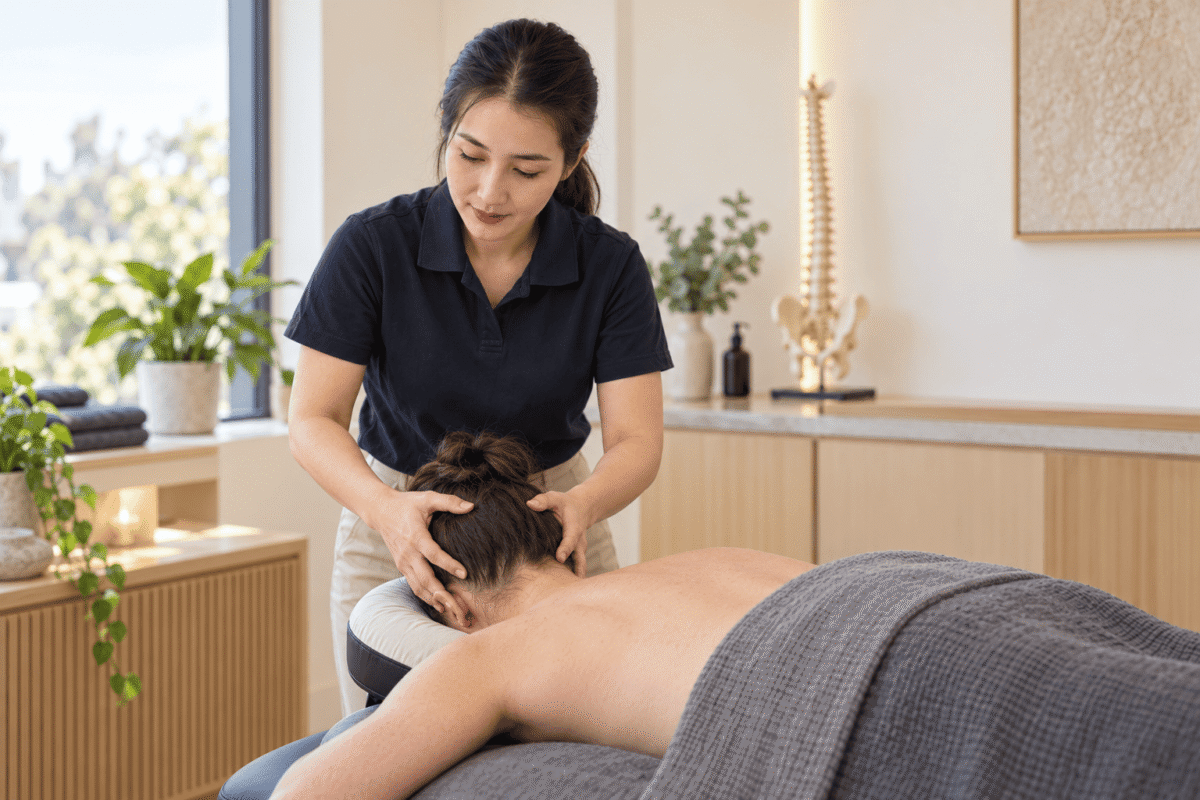
This is where massage therapy may be useful.
Massage can help reduce pain and muscle tension for some people, and sometimes movement feels easier afterwards.
But here’s the important part:
Massage may be one piece of that puzzle.
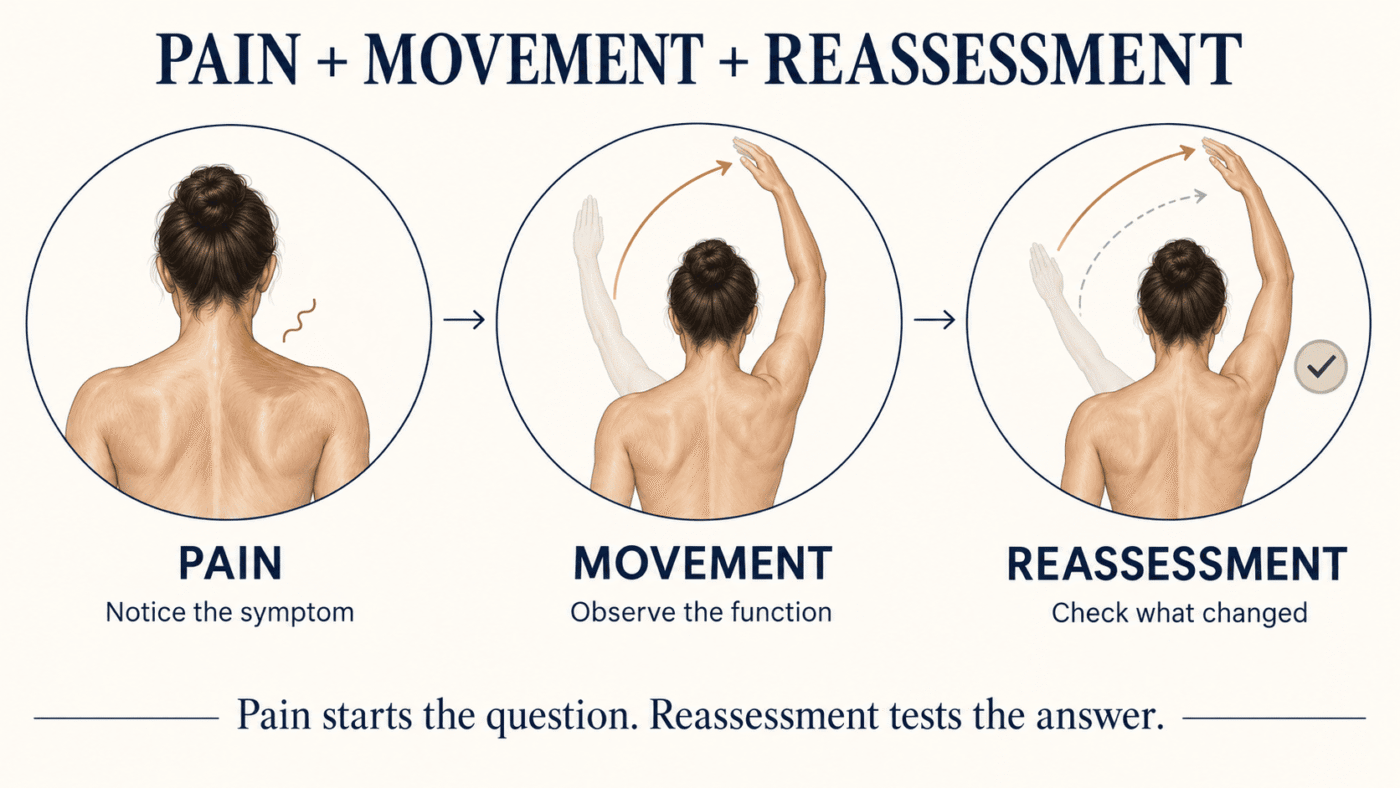
Imagine you couldn’t comfortably turn your head to the left before treatment.
After treatment, we check again.
Can you turn further?
Does it hurt less?
Does it feel easier?
That little reassessment tells us much more than:
“That massage felt amazing.”
Both are valuable — but they tell us different things.
This is why massage therapy can be more than simply working on a sore spot. It can become part of a process:
And sometimes the most useful result isn’t discovering what works.
It’s discovering what doesn’t.
Bodies aren’t machines that need every part perfectly aligned.
We move differently. We have different histories, jobs, injuries, habits and abilities.
The goal is not to chase some imaginary “perfect posture” or perfectly symmetrical body.
It’s to understand:
Massage may be one piece of that puzzle.
Exercise, rehabilitation, medical care, sleep, workload and everyday movement may be other pieces.
The interesting part is figuring out how they fit together.
So next time something hurts, instead of only asking:
“Where is the pain?”
Try asking:
“What has this pain changed about the way I move?”
You might notice more than you expected.
Your Body Talks. Learn to Listen.
Got a strange movement, stubborn pain, or a body part that simply refuses to cooperate?
Ask below. Strange questions are welcome.
Explore More Topics
Continue learning by exploring the area that interests you. Each category offers practical, evidence-informed information to help you better understand the body, pain, treatment and recovery.